05 juin 2006

Arts & citizenship: Do cities have a soul? Does Brussels have a soul?


Thom Mayne, north-american architect who won the Pritzker architecture Prize in 2005, asks himself the question in an interview displayed at the "Morphosis" exhibition, @ the Pompidou Centre in Paris.

The
exhibition is a 250 sqm showcase, a horizontal screen on which one walks, revealing at our feet a view of 16 recent projects (lay-outs, drawings, photographs, etc.) from the Morphosis agency, currently involved in the construction of numerous buildings, to convey the idea of architecture "in the act". Morphosis is an architecture agency based in Los Angeles (actually Santa Monica) founded by Thom Mayne in 1972 (4 years only after graduating in 1968). The display was designed by the agency and takes us back to contemporary myths of L.A. as illustrated by its cinematographic and photographic images. It includes some interviews and documentaries about Thom Mayne and his work.

Moving away from traditional architecture, urbanism and town planning seen as independent disciplines, Morphosis focuses on a cross-cutting multi-disciplinary approach of relationships between the individual, space, territory and the institutional setting. "The designers reaffirm the capacity of architecture to invent its own controls and organizational models following examples provided by biology and computing".

Morphosis started a new phase around 1993, with the book "Connected Isolation" which laid down the basis of Thom Mayne's theoretical language. Even though the agency remained modest in size (around 40 collaborators) some big projects have been developped, including urban interventions, works for the american public administration, etc, as is the case of the Sun Tower in Seoul (1994-1997) and the Diamond Ranch College at Pomona (California, 1999) which marked international recognition for Mayne's work. Nowadays awards and contracts keep growing for ever bigger and more important works such as the Federal Building in San Francisco, the Court of Justice building in Eugene (Oregon), the Caltrans District 7 building in L.A. the Hypo Bank Alpe-Adria in Austria or the social housing complex in Carabanchel, Madrid. Morphosis understands its arena of operation to be one marked by contradiction, conflict, change, and dynamism.

Thom Mayne's and Morphosis' work have certainly contributed to re-shape urbanism and architecture in L.A. and beyond. With their creativity and approach they have contributed (together with other architects) to the recent mutation and dynamism in the californian metropolis. They do not see architecture as the creation of isolated works of art but rather as solutions for human problems in a fast changing world. As Mayne puts it "architecture should help to live in society", and therefore contribute to intensifying social contacts. Mayne has devoted part of his work to the creation of public spaces which can contribute to make a city like L. A. more "human" and attractive. However as he says, the creation of public spaces alone does not mean that people will start to interact more easily. As Mayne puts it, the geography of human relations is complex and modern cities do not work anymore as the previous "villages" in Europe. People do not relate necessarily to their immediate neighbours but live in multi-layered webs of relationships in the global village. Modern cities should adapt to the new models. It is all part of a process whose dynamics are difficult to master and foresee. Mayne seems in any way very aware about the challenges of modern societies and of the difficulties for the future (energetic, social disparities, economic, etc) claiming that architecture and urbanism will have to adapt and reflect the changing world, bringing new solutions and alternatives.

I consider that the creation of public spaces is an interesting and important issue and makes me go back to the initial question "do cities have a soul" ? This is not an easy question to answer, which city do we want to live in? Which is the best model? The answers are differentiated according to the context and diversity is essencial. But it is true that urbanisation has increased throughout the world and people live more and more in and around large urban centers, which have become more and more attractive. Yet, at the same time, sometimes more difficult to live in. Whether we pursue the model of a big city with a multitude of smaller-village communities or the L.A. model or something in between, public spaces can play an important role and can also contribute to increase the attractiveness of a city for living, for doing business or simply to visit. Some cities have been able to create such spaces - Paris with the Pompidou and The Halles area, the Louvre area, the La Vilette complex (among others), London with the new Tate gallery or Covent Garden, Madrid around the Reina Sofia Center, Barcelona with the Port Olimpic or the Maremagnum area, Berlin with the Sony Center and the area around Brandenburg, Lisbon with the Belem Cultural center, Copenhagen with the Black Diamond library, Amsterdam with the Museum area, or other urban cultural equipment works (the Guggenheim in Bilbao) and many others, not only in Europe but also in the US. These experiences are not all equal, some are more cultural, others more commercial, some may have been more successful than others yet they all share similar objectives. They can and have contributed to improve urban life quality and thus can play a central role in metropolitan areas.

However, Brussels, city pretending to be the capital of Europe, has seen no public (nor public-private) investments in this area in the last 25 or more years. Where is in Brussels any public space where cultural and social activities take space? Which brings people together? A place where exhibitions, performances, shows, can take place, where people can meet and interact? The Palais des Beaux Arts? Too small. The
Botanique? Too small. The music city around Tours & taxis? how long before anything will develop there? It simply DOES NOT exist. And Brussels could well create such a public space (there is NO place in this city where a large exhibition can take place), a place dedicated to Europe's cultures, arts and languages. A place which could display european artists (and others!), to come present their work, their art. A place to celebrate culture and diversity. Brussels owes this well to the europeans. And Brussels disposes of excellent architecture and urban possibilities which can be developped. After benefiting economically hugely from the presence of European institutions (and all business around it) it is about time the city gives its inhabitants and Europeans something back. To improve quality of life in the city, as well as its image. What about a plan to improve the public areas around the european institutions, for instance? Yet where is also the initiative from European institutions? NONE! But please, do not follow the usual slow belgian pace (not like the Music Instrument museum which took nearly 10 years to see the light), and spare us the complicated intercomunity struggles. I mean now! I do not mean pharaonic huge projects, does not need to be that, but human scale projects. This city needs projects, ideas, a new soul, not denying its present "soul" if any, but enlarging it, enriching it. And making it more human. More universal.

EXPO - Los Angeles 1955-1985 : Naissance d’une capitale artistique


Le Centre Pompidou à Paris présente cette exposition consacrée à la scène artistique de la ville californienne. L.A. surprend par la diversité et créativité de sa scène artistique, marquée par un renouvellement continu des esthétiques et des artistes. L’art reflète la complexité de cette ville cosmopolite et s'y développe de la culture californienne au cinéma hollywoodien, des mouvements underground au Disneyland. La scène locale s'est affirmée comme une force alternative à la situation new-yorkaise et a attiré des artistes d'origines diverses. L'exposition s'attache à montrer l'importance et la spécificité d'un contexte artistique qui reste à découvrir.

A travers une large sélection de peintures, sculptures, installations, photographies, films et vidéos, l’exposition retrace l'histoire de cette scène particulière, depuis son émergence au milieu des années cinquante jusqu'en 1985 [pourquoi seulement?]. Elle montre notamment les recherches de l'art de l'assemblage, du Pop art, de l'architecture, du Minimalisme californien, du mouvement "Light and Space", de l'art conceptuel, de la performance, etc, au travers d'une sélection de 85 artistes environ. Certains artistes exposés ont une renommée internationale comme Ed Kienholz, Allan Kaprow, Ed Ruscha, James Turrell, John Baldessari ou David Hosckney, d’autres sont moins connus du public européen. A voir!

02 juin 2006

Citizenship: leading role for women in Finland

Article in BBC website celebrates one hundred years that Finnish women became the first in the world to have unrestricted rights both to vote and to stand for parliament. In the elections in the following year, that is, 1907, 19 female Members of Parliament (MP) were elected and women have continued to play a central role in the nation's politics ever since. But it would be only 22 years before the UK and 38 years before France gave women the vote and 65 years before Switzerland followed (in 1971, while some cantons only in the nineties!).

In Finland this year, Tarja Halonen was re-elected president and women play a central role in national politics and in government, they also have a high employment rate and an important participation in the economy. The same is valid for Norway and for the other Scandinavian countries. But this is only the result of a long-standing cultural tradition of gender equality.

Among the 6 top countries with higher percentage of women in the national parliaments in the world (or lower Houses) we find the four Scandinavian countries (Sweden 45.3%, Norway 37.9%, Finland 37.5% and Denmark 36.9%). The other two are Rwanda (48.8%) and Costa Rica (38.6%). Most European countries do quite well, in particular Spain has improved a lot (36%) in the most recent elections, but some countries are still shamelessly lagging behind, such as the UK (19.7%) Greece and Ireland (13%), France (only 12.2%!) and Italy, which is the worst performer in the EU, with only 11.5% of parliamentary seats filled by women. Portugal doesn't do too bad with 21.3%. Outside Europe, Argentina sets the example (35%) but the USA (15.2%) and Japan (9%) are among the worst performers.

This picture is similar for
participation in governments (as well as for other areas of economic and social life) where women still have great difficulties in "imposing" themselves in the "men's world". However things have recently been changing also in other areas of the world (not only in Europe), like in Africa where women have become government leaders (Liberia, Mozambique) or in Southern America (Chile). Several countries have recently elected their first female leader - Liberia, Chile and Germany among them - and women in Kuwait are preparing to vote and stand in parliamentary elections for the first time later this month. This is quite important, knowing how difficult it usually is for women to participate activilely in economic and social life in arab cultures.

Some countries are also introducing "positive discrimination" rules, as Portugal has recently done, to ensure that more women come into politics, parliaments and governments. Following the trend, women should also come more to leading positions in firms, in the private sector.

01 juin 2006

Le temps / the weather

Think well before coming to Belgium, these days, you may wish to avoid Brussels. Today, a fortnight before the official beginning of summer, the temperatures vary between 5°C and 11°C, with rain. / Réfléchissez bien avant de venir en Belgique, ces jours-ci il vaut peut être mieux éviter Bruxelles. Aujourd'hui 1er juin, à une vingtaine de jours de l'Eté, les températures varient entre 5°C et 11°C. / Pense bem antes de vir à Bélgica, por estas alturas é talvez melhor evitar Bruxelas. Hoje, a escassos vinte dias do Verão, as temperaturas oscilam entre 5°C e 11°C, com chuva, muita chuva...

[It seems that the 1st of June 2006 was the coldest in Belgium since 1830... and they dare talking about global warming... / Il semble que le 1er juin 2006 a été le plus froid depuis 1830... et ils osent parler de réchauffement de la planète! / Parece que foi o 1 de Junho mais frio desde 1830, na Bélgica... e ainda se atrevem a falar de aquecimento global...]

Cinema: C.R.A.Z.Y.


Merci à Genres d'à coté de nous proposer le film canadien "C.R.A.Z.Y." en avant-première ce jeudi 1 juin au Cinéma Arenberg (le film ne sortira en Belgique que le 21 juin prochain, mais est déjà sorti à Paris il y a quelques semaines); film réalisé par Jean-Marc Vallée.

"C.R.A.Z.Y. raconte l’histoire de Zachary Beaulieu, de sa naissance le 25 décembre 1960 jusqu’à l’âge adulte; un portrait de famille qui dépeint avec humour et fantaisie l’incroyable périple de Zac, quatrième d’une famille de cinq garçons [dont les noms composent les cinq lettres de Crazy], auxquels il essaie de ressembler. L’histoire touchante, sensible et drôle d’un petit garçon qui, pour ne pas perdre ce qu’il a de plus précieux au monde, l’amour de son père, va renier avec acharnement sa nature profonde."

"Review" suivra...

Media: site intéressant en Belgique

Voici un site au graphisme intéressant, sorte de agenda d'évenements artistiques/ culturels.

Film: "Thumbsucker"

Cinema: "Thumbsucker"

"Thumbsucker” is one of those american sort of independent and alternative films which bring some fresh air into american cinema. It is an honest and funny look at the struggles of people who feel deeply flawed, both those in youth and in middle age. They yearn to be anything but their real selves with their real fears and doubts. Instead, they want to be “normal.” They look for magic answers to fix themselves – only to realize that they can’t be someone else, that “normal” does not exist, and that their flaws are what make them human and loveable.

THUMBSUCKER is directed by newcomer Mike Mills, who also adapted the film from the novel by Walter Kirn. It is served by a set of excellent actors. Lou Pucci, the main character, won Best Actor prizes at the Berlin and Sundance Film festivals

The film is like an independent production with relative small budget. It is “different”, profound yet funny, a bit scary as well, sharp, witty and somehow provocative while endearing. Highly recommended !

Synopsis

Justin Cobb (LOU PUCCI) still sucks his thumb at 17. He wants to stop and knows that his thumbsucking is disrupting his family, his love life and his identity. The only thing that changes his behavior is hypnosis therapy administered by his “guru” orthodontist. But while Justin felt this would solve all his problems and he would finally be “normal,” his troubles were really just beginning. Soon Justin spirals into manic behavior, is diagnosed with ADHD (hyperactive behaviour) and is put on drugs, which become a substitute for his thumb. When the high of the prescription drugs and a newfound success at school crash, Justin turns to pot and sex to replace his thumb… His father Mike (VINCENT D’ONOFRIO) is himself shadowed by the sad twists of youth: a broken college football career apparently sidelined by a knee injury. His wife Audrey (TILDA SWINTON) wonders how she could possibly be “grown up” with a son going to college. She seems to be asking “How did I get here?” and “Is this all there is?” In her early 40s, she is, like Justin, struggling to find out who she is and to accept her shortcomings. As a mother she knows that she doesn’t have all the answers to Justin’s troubles, and that she is sometimes too busy dealing with her own doubts to help him. Audrey hides from these realities through an obsession with a TV heartthrob, Matt Schraam (BENJAMIN BRATT). Justin turns to others outside his family for help and to get some answers. His New Age orthodontist, Perry Lyman (KEANU REEVES), seems to mirror Justin’s ups and downs and becomes sort of a spiritual guide...


[from the films website]

31 mai 2006

Voyage: Montpellier


Ce weekend j'ai eu la chance de pouvoir visiter Montpellier, dans le sud de la France. Capitale du département de l'Hérault et de la région de Languedoc-Roussillon, Montpellier est une superbe ville méditérranéenne, presque parfaite. Elle a été planifié pour être vraiment vécue par les piétons, dans le centre ville mais aussi dans des parties plus modernes comme Antigone. Près de la mer et pas loin des montagnes, touchée par un climat superbe, elle est un régal pour le visiteur, avec le mélange de petites places, ruelles de pierre calcaire, boulevards, etc. En plus avec le superbe temps qu'il faisait, j'ai presque oublié le nord... il faudrait y aller plus souvent. Cliquez ici pour voir quelques photos.

Cinema/tv: "Six Feet Under" is over


Six Feet Under is over. It is for me now because I just finished watching its fifth and last series. But in fact it was concluded in August 2005, although it was only now released on DVD. It was a critically acclaimed and popular television drama produced by HBO, who have already produced excellent series like “Sex & the city”. It first started on June 3, 2001 and went on for five years!

The show was created by Alan Ball and revolves around a family funeral business (the Fisher) run by two brothers, and the rest of the family and the relationships around the family. It is set in present day Los Angeles, California (2000–2005).

Although it is a conventional family drama, dealing with the usual issues as relationships, sex, infidelity and religion it is quite original and innovative, not only for its focus on a “different” topic – death – but also for the sometimes profound way it presents the characters and human relations and explores this on multiple levels (personal, religious, and philosophical). Each episode always begins with a death (with two exceptions) which will be dealt by the funeral home and which sets the tone.

Over the last months I had developed a certain anxiety towards "Six Feet Under," waiting eagerly for the final series to come out. Despite the fact that the series was not always perfect, that it was sometimes frustrating to see how it sometimes just didn’t advance or the inconsistencies of the characters (one minute George can't go out shopping by himself, some episodes later he's giving a well-prepared speech at Nate’s funeral; one minute Vanessa is manic depressive and driving Rico away, and the moment he finally cheats on her, she's gets magically cured) and other typical soap opera tendencies, it becomes addictive and one becomes “part” of the Fisher’s life and is eager to know what will happen next and will wait eagerly for the next dialogues.

After all, the ending was quite satisfying and original, for such a series, which wasn’t won in advance. The last five minutes show the death of all the central characters, in the future and was particularly moving (the final death occurring in 2087). Yet somehow at the end it is quite frustrating because we end up wondering all that would happen to the family and all the characters.

All in all, an interesting series, superbly interpreted by nearly all the actors, which makes us wait for other original series by HBO. To be recommended.

Read more: click here and/or here.

30 mai 2006

Travel: Barcelona posa't guapa!


Barcelona is definitely one of my favourite cities. A fascinating city, it has got everything: history, style and many architecture styles, design, monuments, museums, shops, a great location and a nice climate, an eclectic mixture of modernity and tradition, of old and new, avant-garde, sea, mountain, good food, good looking people. Here is a small tribute to that special mediterranean port, with some photos I took. Not necessarily the usual monument - Gaudi - grand boulevards of the Eixample pictures, but rather from popular areas or mixed areas like Raval, Bairrio Chino, El Born but also from other parts, even Sitges... details that have kept my attention. To be completed hopefully in future trips... click here

Music: new I AM X album


After the excellent first album "Kiss & swallow", Chris Corner, formerly from the group Sneaker Pimps, has brought out the new release of his group's I AM X, “THE ALTERNATIVE”, last April 21st 2006 (out in Belgium as well but not in France yet). This album is even better than the first one, and is to be heard in-one-go… non-stop… actually it is to be heard as one long song... It's a sad and romantic album, for those melancholic moments, when you feel like being alone or when you feel that the world has left you alone.

The first track "The president" is now available as a free download.

I AM X is now touring Europe with its Alternative tour, until mid August. I have unfortunately missed them in Brussels last May 6, when they played @ the
Botanique, but there will be a new chance maybe when they play at the Dour Festival (not far from Mons) next July 15.

Music: Kitsuné again


La maison Kitsuné (connue pour ces excellentes compils Kitsuné Midnight et Kitsuné X) sort sa nouvelle compilation Kitsuné Maison 2. La compilation, qui veut être la découverte de nouveaux talents, offre une sélection de morceaux de tous horizons très éclectique avec Wolfmother, Bloc Party, Cazals, Azzido da bass, Joakim, Digitalism (excellent!), Simian Mobile Disco, Fox n wolf, Adam Sky, Next level Pop.... Cette compil sera disponible en avant-première chez Colette à Paris (for the lucky ones…) et sera aussi dispo sur eshop de Colette (attention, leurs envois par poste prennent sont temps).

[EN]
Kitsuné brings out (known for its excellent compilations Kitsuné Midnight & Kitsuné X) its new CD Kitsuné Maison 2, reinforcing Kitsuné's status as discoverers of new talents. This album presents an ecclectic collection of tracks by superbly-sentimental groups/singers, such as Wolfmother, Bloc Party, Cazals, Azzido da bass, Joakim, Digitalism (yeah!), Simian Mobile Disco.... The CD will be on pre-sale available @ Colette in Paris (yes, for the lucky few) and can be ordered from the Colette e-shop, as from June 1st.

29 mai 2006

MUSIC: The Barcelona Spring festivals are coming!


The twelfth edition of the Sonar festival will be held on 15th, 16th and 17th of June 2006 in Barcelona. Those will be three days and three nights in touch with the most up-to-date music developments and featuring relevant Spanish and international artists. Sónar will be presenting over 300 activities including DJ sets, concerts, films projected at the SonarCinema and works in every multimedia format: installations, Net art, design, etc. Sónar aims to be an essential meeting point for an alert public, cutting-edge and avant-garde artists and the most influential professionals from the sectors of music and modern arts.

Sonar by day presents Concerts, DJ sets, a professional fair, a multimedia area, audio-visual projections in all formats, a mediatheque, conferences and exhibitions. Nights at Sónar are of a distinctive nature, an enormous cosmopolitan celebration, similar to other European music events but with a Mediterranean flair, giving it a unique atmosphere. Each night DJs, VDJs perform concerts from the broadest spectrum of dance music simultaneously in 4 areas, occupying an area of more than 10,000 meters, divided between covered and open-air spaces.

Sonar will stage some well known and other less-known names from the world of electronic music, such as Jimmy Edgar, Jeff Mills, Ángel Molina, Goldfrapp, Miss Kittin, Modeselektor, Agoria, Wagon Cookin´, Hot Chip, Dave Clarke, Disco D, The Infadels, Isolée, Richie Hawtin vs Ricardo Villalobos, Tiga, Gilles Peterson, Laurent Garnier & Bugge Wesseltoft and Herbert among others.

The prices are not cheap… the General Pass for the 3 Days + 2 Nights of the festival costs 130€ while the Day Ticket is 25 € and a Night Ticket 40 €.

But Barcelona never stops, never sleeps... In the meantime, the
Estrella Damm Primavera Sound festival will take place from June 1 to 3. This year's edition changes location from the Pueblo Español in Montjuic to the previous location of the Forum of the Cultures of 2004, at the end of Diagonal avenue - see website for details.

This year's edition will include musicians, DJs and groups like 2 Many Dj's, Ellen Allien & Apparat, Lou Reed (yes!), M.A.N.D.Y., Erol Alkan, Stuart A. Staples, The Flaming Lips, Yeah Yeah Yeahs, José González, Killing Joke and the spanish cult group La Buena Vida, among others.

Tickets are also not cheap, a three-day tickets 115 € while day tickets for Thursday 1st of June are 40 € and 65 € for Friday 2nd and saturday 3rd. You also have the chance to listen to all the artists and news from the Primavera Sound festival on the alternative radio from Barcelona
ScannerFM, monday to fridays at 17:00.

So what are you waiting for? Check out your local low cost companies (Vueling, Virgin, Ryanair, etc) and book your flights to Barcelona... the place to be... and not only for its music festivals!

Citizenship: Gay Pride banned in Moscow


At a time of the year when Gay Pride marches are being held all around the world, commemorating the Stonewall riots (which took place in New York in June 27, 1969, 37 years ago) and cellebrating the pride and right to be "different", Moscow saw the first-ever attempt to stage a gay-pride march end in violence, injuries and mass arrests, last saturday, May 27.

Despite Mayor Iuri Loujkov's ban, activists took to the streets to protest. More than hundred people were jailed for questioning by the Moscow police force and tens of protestors violently attacked by skinheads and religious extremists saturday, who shouted "Moscow is not Sodome!". The Gay Pride had been banned by the Mayor of Moscow, Iouri Loujkov, considering that such an event was morally "inadmissible". His decision had been backed up by the Tverskoi District Court.

Nikolaï Alekseïev, leader of the organisation "GayRussia", which defends gay rights in Russia, was attacked, with several other activists when they tried to approach the unknown soldier's tomb to deposit flowers, as noted a journalist of AFP. The aim of the gesture was to show a parallel between the prohibition of the Gay Pride, the fight against gay rights and the fight against nazi Germany.

Some members of Parliament, official representatives and journalists from the US, France, the UK, the Netherlands and Germany had come to Moscow to support the local gay community and to protest against the ban of the parade. Volker Beck, a German Bundestag delegate, was hit and had his face in blood, while others were also attacked. Philippe Lasnier, from the cabinet of the mayor of Paris, Bertrand Delanoë, was briefly taken in for questioning by the police. Another French participant declared that "the situation of gays in Russia is even worse than I imagined". Foreign delegations had come to demonstrate peacefully but were astonished by the lack of support from the police to protect the demonstrators of the attacks of skinheads and orthodox extremists.

At a time when Russia takes the chair of the Council of Europe and has won a seat in the Human Rights Council of the UN, these facts are extremely worrying. In fact the Russian authorities do not seem to allow minorities the freedom of expression. In a press conference Nikolaï Alekseïev considered that homophobia is only a part of Russia's broader problem of xenophobia.

Read more also at
Ilga's website.

[seen in Le Monde] [source of the picture: Ilga's website]

Citoyenneté: Xénophobie et homophobie à Moscou


Arts: Expo Almodovar à la Cinémathèque Française à Paris


La Cinémathèque Française à Paris s'est mis à l'heure du plus fameux et atypique des cinéastes espagnols. Le nouveau lieu de la Cinémathèque à Bercy ouvre ses portes à Almodovár, jusqu'au 31 juillet 2006, pour une exposition accompagnée de rencontres, d'une rétrospective de ses films et d'une programmation de ses coups de coeur cinématographiques, présentant un large portrait du cinéaste et de son univers.

Après vingt-cinq ans de carrière, Almodovár incarne toujours le renouveau: avec chaque film on espère qu’il nous surprenne, qu’il nous séduise, qu’il nous émeuve et nous transporte dans son univers unique… on demande à chaque fois qu’il soit toujours plus Almodóvar. Un Grand cinéaste, très espagnol mais très universel, léger et grave, comique et tragique, plein de contrastes et de couleurs. Pas facile d'être à la hauteur des atteintes du public, mais ces films sont toujours intéressants.

L'exposition parvient à nous faire "plonger" dans l'univers "almodovarien" et nous propose un parcours d'entretiens, scènes anthologiques de ces films, objets, de décoration et même des courts jamais vus… des curiosités cinématographiques. Je conseille vivement cette expo, il ne faut pas la manquer… la
¡ Almodóvar Exhibition !

- Le programme complet

24 mai 2006

CITIZENSHIP: Amnesty International brings out 2006 report

Amnesty International has published its 2006 Report [en français]. This Report documents human rights abuses in 150 countries around the world. It highlights the need for governments, the international community, armed groups and others in positions of power or influence to take responsibility. It also reflects the vitality of human rights activists globally, whether in local initiatives, international summits or mass demonstrations. "Outraged by continuing human rights abuses and inspired by hope, Amnesty International members and supporters around the world campaign for justice and freedom for all."

According to AI, during 2005 some of the world’s most powerful governments were successfully challenged, their hypocrisy exposed by the media, their arguments rejected by courts of law, their repressive tactics resisted by human rights activists. After five years of backlash against human rights in the “war on terror”, the tide appears to be turning. Nevertheless, the lives of millions of people worldwide were devastated by the denial of fundamental rights. Human security was threatened by war and attacks by armed groups as well as by hunger, disease and natural disasters. Freedoms were curtailed by repression, discrimination and social exclusion.

The report has of course been received with different enthusiasm by the different countries and organisations. AI denounces that sometimes those countries which refer most to democratic values, of justice and freedom that are sometimes in a position to violate human rights. For the US, however, a spokesman has recalled that it was precisely AI the first to denounce Saddam Hussein's regime. The US considers that the NGO should better focus in participating in the process of the ex-dictator instead of denouncing the use of mercenaries in Iraq or the situation in Guantanamo.

The report focus on several issues and considers that there is reason for hope:


· DEATH PENALTY: there are good reasons for hope. By 2005, 122 countries had abolished the death penalty in law or in practice, in comparison to only 16 abolitionist countries in 1977.

· HYPOCRISY: In 2005, the US Administration acknowledged the use of "renditions". Rendition is the practice of transporting persons forcibly and without due process from one country to another where they risk being interrogated under torture or ill-treatment. AI says that renditions are illegal under international treaties to which all European governments are party.

· DUPLICITY: Governments championed human rights on the one hand, and undermined them on the other (examples needed?).

· TORTURE: 141countries are party to the UN Convention against torture and other ill-treatment. However, 104 countries out of the 150 countries in AI’s 2006 report that have tortured or ill-treated people.

· PARALYSIS OF THE INTERNATIONAL COMMUNITY: The conflict in Darfur has been described as staggering in scale and harrowing in nature. Urgent action is needed by the United Nations and the African Union to protect civilians in Darfur. Since 2003, there has been an estimated number of deaths from starvation, disease and killings of some 285,000 plus 2.2 million refugees and people displaced by the conflict. In the meantime, 13 UN Security Council resolutions have been adopted on Darfur, but ZERO United Nations peacekeepers have been deployed in Darfur.

· FAILED PROMISES: At the Millennium Summit in 2000, the world’s leaders set clear targets to solve some of the most vexing global social problems. But, they failed to turn their promises into performance. For instance, Governments promised to achieve universal primary education by 2015, however still more than 100 million children remain out of school. At the same time there is an estimated number of child soldiers of 300,000.

· TORTURE & TERROR: Thousands of people have been detained without charge or trial, tortured and ill-treated in the name of counter-terrorism, as for instance in Guantanamo.

- VIOLENCE AGAINST WOMEN: From birth to death, in times of peace as well as war, women face discrimination and violence at the hands of the state, the community and the family. 2 million girls are still at risk of female genital mutilation each year. Only 9 countries have specific legislation outlawing female genital mutilation. Also 25% of women experience sexual abuse by an intimate partner in their lifetime. 79 countries have still no legislation against domestic violence.

· ARMS CONTROL: The proliferation of small arms is fuelling conflict, poverty and human rights abuses worldwide. 1000 is the average number of people killed every day by small arms !!! 1 to 10 - for every $1 spent on development assistance $10 is spent on military budgets. Plus: 88% reported conventional arms exports are from the 5 permanent members of the UN Security Council: China, France, Russia, UK and USA !!!

None of this is surprising, since, as the report well says, this is a world of duplicity and hypocrisy. To notice only that the
violation of human rights based on sexual orientation does not seem to be one of the priorities for AI, and there also is a lot to be reported…

22 mai 2006

Arts: the 25 sexiest novels ever written

The magazine PlayBoy has just established the classification of the 25 sexiest novels ever written. In the top ranking appea "Memoirs of a Woman of Pleasure (Fanny Hill)" by John Cleland, the "Lady Chatterley's Lover" by D. H. Lawrence and "Tropic of Cancer" by Henry Miller. "Some of the titles were famous for being dirty books for decades, contraband smuggled in the US from Paris. A few were champions in the courts, books that freed the language. Some tackled taboos. Others showcased attitude -- either curiosity or humor or energy. To us, they are the ultimate love stories". Check out for yourself.

[Fr]
La revue coquine PlayBoy vient d'établir le
classement des "25 romans les plus sexy jamais écrits". Figurent dans le peloton de tête, les sulfureux Fanny Hill de John Cleland, L'Amant de Lady Chatterley de David Herbert Lawrence et Tropique du Cancer d'Henry Miller.

[seen at "le Monde Digital"]

World - Darfour: where is China?

A lead journalist from the international Herald Tribune asked Mr Bush this question. Bush has recently asked the international community to join the American effort in ending the Darfour "genocide" (in Sudan). Knowing that the rich and proud Chinese civilisation has a saying for each circumstance and bearing in mind that China buys 60% of the oil production of Sudan, i.e. 7% of its imports, a proverb comes to mind: "the large tree get the wind." The Chinese "tree", which grows so quickly, has a small "offspring" diplomacy which remains in an unfortunate state of no growth, argues the IHT. Beijing states that it "respects all the cultures and all the regimes". Very convenient, I add. This shouldn't be seen as a sign of "immaturity" but rather of "cynicism" writes the journalist. China will probably not use its veto in the Security Council when the UN will try to put pressure on Khartoum. On the spot, the African Union has huge difficulties in trying to control a conflict which has already made 200,000 deaths and some 2 million refugees, writes the New York Times. China knows this and should take an active role. This should also be the message that Angela Merkel will try to convey during her first official visit to China, requesting Chinese authorities to take a more active role in solving the world's conflicts. Obviously, the UN, the world powers and the World have not learnt with the Rwanda (tragic) experience.
[read in "Le Monde Digital"]

ECONOMY: pure economic statistics in Europe

Eurostat, the Statistical Office of the European Union, brings out the most recent regional statistics on GDP per inhabitant in the EU25 (the 25 member states of the European Union), expressed in terms of purchasing power standards (PPS).

In 2003, GDP per inhabitant ranged from 33% of the average (of the 25 EU countries), in Lubelskie (Poland) to 278% in Inner London (UK). There is still plenty of work for the EU's regional and cohesion policies to reduce disparities within the Union...

One region in seven above 125% of the EU average...

The three leading regions in the ranking of regional GDP per inhabitant in 2003 were Inner London in the United Kingdom (278% of the average), Bruxelles-Capitale in Belgium (238%) and the Grand Duchy of Luxembourg (234%). Among the 37 regions exceeding the 125% level, seven were in Germany, six each in Italy and the United Kingdom, five in the Netherlands, three in Austria, two each in Belgium and Finland, one region each in the Czech Republic, Spain, France, Ireland and Sweden, and the Grand Duchy of Luxembourg. The only region in this group amongst the new Member States was Praha in the Czech Republic (138%).
It should be noted, however, that in some regions the GDP per inhabitant figures can be significantly influenced by commuter flows (as is the case of Inner London or Brussels). Net commuter inflows in these regions push up production to a level that could not be achieved by the resident active population on its own. The result is that GDP per inhabitant can therefore be overestimated in these regions and underestimated in regions with commuter outflows.

…and one in four below 75%

The six last regions in the ranking were all in Poland: Lubelskie and Podkarpackie (both 33% of the average), Podlaskie (36%), Świętokrzyskie, Warmińsko-Mazurskie and Opolskie (all 37%). Among the 60 regions below the 75% level, sixteen were in Poland, seven in the Czech Republic, six in Hungary, five each in Greece and Italy, four each in Germany, France (all overseas departments) and Portugal, three in Slovakia, two regions in Spain, and Estonia, Latvia, Lithuania and Malta. The lowest ranked region amongst the old Member States was Norte in Portugal (57%).

In the European Region, cohesion policies (The ERDF - European Regional Development Fund, and the Cohesion Fund), which account for around one third of the Union's budget, play a key role in the effort of development of the lowest ranked regions, in reducing development disparities by promoting policies that favour economic growth, job creation and improve the competitiveness of those regions. In particular regions with a GDP per head lower than 75% of the Union's average (in PPS).

ARTS: encore la danse contemporaine à Bruxelles

Le festival initialement nommé Danse à la Balsa s'est associé en 2004 au théâtre Marni et s’associe cette année à Charleroi/Danses pour devenir Danse Balsa Marni & Raffinerie. Ensemble ils proposent des spectacles de danse contemporaine du 1er au 24 juin au Théâtre de la Balsamine, au Théâtre Marni, à la Raffinerie ainsi qu’à l’Espace Senghor. Il y a des choréographies qui semblent intéressantes et d'entre elles je conseille "Drink your wine in my glass", choreographée par l'espagnol Fernando Martín (un copain) qui danse en duo avec Sarah Piccinelli – les 14, 15, 16 juin à 19h30 au Théâtre Marni.

Pour des renseignements, informations et réservations: http://www.balsamine.be/danseX_infos.php

Infos/


Théâtre de la Balsamine
1 avenue Félix Marchal / 1030 Bruxelles
02 735 64 68
balsamine@skynet.be /
www.balsamine.be

Charleroi/Danses
Raffinerie / 21 rue de Manchester / 1080 Bruxelles
071 20 56 40
www.charleroi-danses.be

Théâtre Marni
25 rue de Vergnies / 1050 Bruxelles
02 639 09 80 82
www.theatremarni.com /
info@theatremarni.com

18 mai 2006

L'EUROPE sera-elle une "finalité sans fin"?


Arts: Rosas @ La Monnaie


Il est difficile de choisir quoi faire les soirées du mois de Mai à Bruxelles. A part les sorties cinémas - et cette semaine il y au moins "Volver" de Almodovar (voir article en post antérieur) et "DaVinci Code" - il y a plein d'activités, ce qui aide au moins à compenser le temps qui n'est pas vraiment à la hauteur... Non seulement il y a le Kunsten festival des Arts, le Jazz Marathon, il y a aussi , vendredi soir @ Ancienne Belgique, CIBELLE, chanteuse brésilienne à l'inspiration bossa-nova-pop-electro-folk... soit une bossa au gout du jour... Et puis il y a ROSAS, le groupe de Anne Teresa de Keersmaker, qui présente sa création 2006 "D'un soir un jour" à La Monnaie, où la compagnie est résidente pour la dernière année (spectacle du 17 au 21 mai). Mais le mois de mai ne s'arrêtera pas là, il y aura plein d'autres manifestations, qui se prolongent en juin (par exemple avec le festival CouleurCafé). Pour ma part, je compte ne pas rater Rosas.

"Evénement exceptionnel, George Benjamin compose pour Rosas une vaste pièce musicale - Dance Figures - qui sera créée par l'orchestre symphonique de la Monnaie sous la baguette de Kazushi Ono conjointement avec la compagnie d'Anne Teresa De Keersmaeker. Benjamin se déploie dans une soirée de danse que Debussy ouvre et referme. Entre eux soufflent les vents véhéments de Stravinsky. Trois compositeurs et six symphonies pour éveiller le mouvement."

17 mai 2006

Brussels Jazz Marathon


This weekend will see the 11th Edition of the Brussels Jazz Marathon make the capital of Europe swing - 19 -20 -21 May. It will be a huge party in the main squares, in hotels, cafés and clubs of Brussels with 400 musicians performing in more than 50 venues. The reputation and quality of belgian jazz are well known and the marathon is not too jazz-fundamentalist. So get ready to swing, chill out & groove in the streets, weather allowing... Check the programme here: www.brusselsjazzmarathon.be

Citoyenneté: "80 pays considèrent encore l'homosexualité comme un crime"


Arts in Brussels: Kunsten Festival des Arts


The Kunsten FESTIVAL des Arts was founded by its director Frie Leysen in 1994, with its first edition. This year it will present music, theatre, dance and other art performances in Brussels between 4 and 27 May.

The conviction that created the KunstenFESTIVALdesArts and is still cultivated by it today is that each one of the realities is complex and cannot be compartmentalised without being damaged. The international festival of contemporary living arts is not built around a pre-established theme or a single artistic discipline, and even less so around a single community, region or country. Its programme brings to light the artistic personalities tackling the complex features of our contemporary societies, and the beauty with which they freely shape current forms to make us hear what they have to say about the present day - without complicating what is simple or simplifying what is complicated.

This is the KunstenFESTIVALdesArts' ninth encounter with the public. It is still a new festival. It asserts the radical choice of not conforming to the tacit borders that often divide up cultural life and our own existences. In Brussels, the symbolic capital of Belgium and of Europe, it offers: - the contemporary work of artists from outside Europe in order to put into perspective the Eurocentric cultural vision with which we are saturated, in spite of ourselves - a high quality selection of current projects by European artists who all too rarely have the opportunity of being discovered by Belgian audiences - the presentation of Belgian artists in an international context - an all too rare platform of encounter for French-speaking and Dutch-speaking artists and audiences in Brussels - dialogue between various contrasting generations, aesthetics and writing, motivated here as elsewhere by the same exacting concern of bearing witness to the present day - a free selection of artistic disciplines - musical theatre, theatre, performance, visual arts and film - that are often blended together to enable the most appropriate language for each contemporary vision to flourish here. Having an international outlook and complementing the existing artistic offerings in Belgium, the KunstenFESTIVALdesArts endeavours to play what it considers to be an essential role of 'bringing together' and 'confrontation'.

The announced failure of the UN Human Rights Council (UNHRC),

Last week the United Nations held elections to the newly created United Nations Human Rights Council (UNHRC), successor to the failed UN Commission on Human Rights.

The 53 members elected (for a period of 2 years plus one) include Algeria, China, Cuba, Pakistan, Russia and Saudi Arabia all of which have excellent human rights records as is widely known. These countries were previously key players in undermining the effectiveness of the now-defunct “Commission on Human Rights”, and so it is to expect that they will try to play the same role on the new Council, steering it away from confronting UN members with their human rights abuses.


Ironically, just before the election, the United States Commission on International Religious Freedom issued its 2006 ANNUAL REPORT, which presents the immaculate records of China, Cuba, Pakistan, the Russian Federation and Saudi Arabia. Here some excerpts about the records of those countries as to religious freedom [source: newsbyus.com]

Cuba: “Religious belief and practice continue to be tightly controlled in Cuba, where the government rarely permits the construction of new places of worship. A new law on religion, adopted last year and meant to ‘legalize’ certain religious activity, actually reinforces the government’s efforts to maintain control over religious practice. Reports indicate that at least three Protestant house churches have been closed, confiscated, and/or demolished since the new law went into effect. In the past year, both registered and unregistered religious groups continued to experience varying degrees of official interference, harassment, and repression.” [Source: ANNUAL REPORT OF THE UNITED STATES COMMISSION ON INTERNATIONAL RELIGIOUS FREEDOM; May 2006, p. 91.]

China: “Every religious community in China is subject to serious restrictions, state control, and repression. The most severe religious freedom abuses are directed against Tibetan Buddhists, Uighur Muslims, Roman Catholics, house church and unregistered Protestants, and spiritual groups such as the Falun Gong – abuses involving imprisonment, torture, and other forms of ill treatment. Though the Chinese government issued a new Ordinance on Religion in March 2005, its provisions, in fact, restrict rather than protect religious freedom, offering Party Leaders more extensive control over all religious groups and their activities.” [ANNUAL REPORT; p. 83]
Pakistan: “…a number of the country’s laws, including legislation restricting the Ahmadi community and laws against blasphemy, frequently result in imprisonment on account of religion or belief and/or vigilante violence against the accused. These religious freedom concerns persist amid the wider problem of the lack of democracy in Pakistan, an obstacle the current government has done little to address. …Given the importance of Pakistan in the U.S. government’s efforts against terrorism, the failure of the Pakistani government to implement genuine religious freedom reforms is a cause for serious concern.” [ANNUAL REPORT; p. 89]


The Russian Federation: “Since the [United States] Commission [On International Religious Freedom] expressed strong concern in its May 2003 report that the Russian government was retreating from democratic reform and endangering significant gains on human rights, including freedom of religion or belief, it has become increasingly clear that this is a deliberate policy of the Russian government. … The country’s progress toward the rule of law and protection of religious freedom and other human rights is now in peril.” [ANNUAL REPORT, 159.]

Saudi Arabia: “The repressive Saudi government continues to engage in an array of severe violations of human rights as part of its repression of freedom of thought, conscience, and religion or belief. Abuses include: torture and cruel and degrading treatment or punishment imposed by judicial and administrative authorities; prolonged detention without charges and often incommunicado; and blatant denials of the right to liberty and security of the person, including coercive measures aimed at women…” [ANNUAL REPORT, 190.]

16 mai 2006

17 May is the International Day Against Homophobia

On 17 May 1990, the General Assembly of the World Health Organization (WHO) removed homosexuality from their list of mental disorders. The fight for the recognition of equal rights for lesbian gay, bisexual and transgender (LGBT) people did not end there though.

Today around 80 countries in the world still criminalize homosexuality and condemn consensual same sex acts with imprisonment, of these 9 (Afghanistan, Iran, Mauritania, Nigeria, Pakistan, Saudi Arabia, Sudan, United Arab Emirates and Yemen) still have the death penalty. And Pakistan and Saudi Arabia were elected last week as members of the recently created United Nations "Human Rights Commission"!!! (along with other human rights expert "champions" like Algeria, China, Cuba and Russia). Discrimination on the ground of sexual orientation and gender identity is still not recognized formally by the member states of the United Nations (even though human rights mechanisms such as the Human Rights Committee have repeatedly condemned discrimination on the basis of sexual orientation and gender identity). ILGA has been fighting against discrimination and for the recognition of equal rights of LGBT persons since its creation in 1978. ILGA is strongly committed to celebrating this second International Day Against Homophobia, launched one year ago by the International Day Against Homophobia Committee (IDAHO).

ILGA has created a 30-second video to celebrate this date. See it at ILGA's website.

In every country of the world, please pass the message: 17 May is the International Day Against Homophobia, it is of homophobia that you should be fearful, not homos!

23 avril 2006

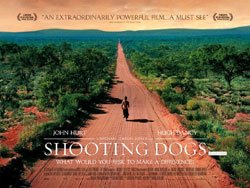
Cinema & Citizenship: "Shooting Dogs" on the Rwandan genocide


“Shooting Dogs” is a film dealing with the Rwandan genocide of 1994. It was shot in Rwanda, directed by Michael Caton-Jones and starring British actors John Hurt and Hugh Dancy, playing a Catholic priest and a teacher respectively, caught up in the genocide. The film portrays the incidents which took place during six days in April 1994 at Kigali‘s Ecole Technique Officielle, run by priests and where Belgian U.N. troops were located. The film is based on real events and was filmed at the actual location where the story took place, involving a number of genocide survivors as its cast & crew members.

When tension between Tutsis and Hutu escalated into genocide, the school became a safe haven for Europeans and Tutsis, under the protectorate of the UN. At least 2,500 Tutsis took refuge there during the initial days of the genocide. But when belgian UN soldiers pulled out, abandoning the Rwandans to their fate, Hutu militias quickly overran the school and within hours massacred nearly all the men, women and children.

The second film dealing with the Rwandan genocide after “Hotel Rwanda”, "Shooting Dogs" is arguably more powerful and harder to watch than the Oscar-nominated “Hotel Rwanda”. John Hurt in particular has a great performance, as well as Hugh Dancy.

This committed film plays an important role in remembering Rwanda’s tragedy and in questioning the West's role in Africa, which is as vital for the future as understanding the past. The film provides a good example of the reluctance of western governments to be involved in conflicts that have no material impact on them as well as of the hypocrisy behind the action of western powers. It also shows the incompetence, weakness and inefficacity of the UN to deal with world conflicts. The question is: how can those people who oversaw this tragedy and took the wrong decisions sleep nowadays?

Notes on the Rwandan Genocide from wikipedia:
The Rwandan Genocide was the slaughter of an estimated 937,000 Tutsis and moderate Hutus, mostly carried out by two extremist Hutu militia groups, the Interahamwe and the Impuzamugambi, during a period of 100 days from April 6th through mid-July 1994.
For many, the Rwandan Genocide stands out as historically significant, not only because of the sheer number of people that were murdered in such a short period of time, but also because of the way many Western countries responded to the atrocities. Despite intelligence provided before the killing began, and international news media coverage reflecting the true scale of violence as the genocide unfolded, virtually all first-world countries declined to intervene.
The United Nations refused to authorize its peacekeeping operation in Rwanda at the time to take action to bring the killing to a halt. Despite numerous pre- and present-conflict warnings by Canadian Lieutenant-General Roméo Dallaire the UN peacekeepers on the ground were forbidden from engaging the militias or even discharging their weapons, unless fired upon. In the weeks prior to the attacks the UN ignored reports of Hutu militias amassing weapons and rejected plans for a pre-emptive interdiction.


The UN and member states appeared largely detached from the realities on the ground. In the midst of the crisis, Dallaire was instructed to have UNAMIR focus only on evacuating foreign nationals from Rwanda, and the change in orders even led Belgian peacekeepers to abandon a technical school filled with 2,000 refugees, while Hutu militants waited outside, drinking beer and chanting "Hutu Power." After the Belgians left, the militants entered the school and massacred those inside, including hundreds of children. Four days later the Security Council voted to reduce UNAMIR down to 260 men. But finally, on April 29, 1994, the UN conceded that "acts of genocide may have been committed." By that time, the Red Cross estimated that 500,000 Rwandans had been killed.

This failure to act became the focus of bitter recriminations towards individual policymakers specifically, such as Jacques-Roger Booh-Booh, (who was the administrative head of UNAMIR and former Cameroonian foreign minister), as well as the United Nations and countries such as France and the United States more generally and President Clinton specifically. Clinton was kept informed on a daily basis by his closest advisors and by the U.S. Embassy of Rwanda. President Clinton has said "It’s the biggest regret of my administration". He has visited Rwanda several times since leaving office. The genocide was brought to an end only when the Tutsi-dominated expatriate rebel movement known as the Rwandese Patriotic Front, led by Paul Kagame, overthrew the Hutu government and seized power. Trying to escape accountability, hundreds of thousands Hutu "genocidaires" and their accomplices fled into eastern Zaire (now the Democratic Republic of the Congo). The violence and its memory continue to affect the country and the region. Both the First and Second Congo Wars trace their origins to the genocide, and it continues to be a reference point for the Burundian Civil War.

21 avril 2006

Citoyenneté: De l'Argentine aux Nations Unies

Pedro Anibal Paradiso Sottile et Cesar Cigliutti, membres de l’ILGA et de la CHA (Comunidad Homosexual Argentina) ont donné un discours sur l’orientation sexuelle et l’identité de genre aux Nations Unies. Pour eux, aucune religion fondamentaliste, aucune doctrine, aucune politique ne peut justifier la honte de l’inégalité et des injustices dont souffrent les personnes à cause de leur orientation sexuelle et de leur identité de genre.

[En]
For Pedro Anibal Paradiso Sottile and Cesar Cigliutti, members of ILGA and of the CHA (Comunidad Homosexual Argentina), who talked to the United Nations on sexual orientation, no fundamentalist religion, no doctrines, no policy can justify the shame of inequality and of injustice, which persons suffer due to their sexual orientation and their sexual identity.

[Pt]

Para Pedro Anibal Paradiso Sottile e Cesar Cigliutti, membros da ILGA e da CHA (Comunidad Homosexual Argentina), que falaram às Nações Unidas sobre orientação sexual e identidade sexual, nenhuma religião fundamentalista, nenhuma doutrina, nenhuma política podem justificar a vergonha da desigualdade e as injustiças que sofrem as pessoas devido à sua orientação e/ou identidade sexual.

Read more / lisez encore / leia mais:
ILGA website

Belgique : L'adoption homo définitivement adoptée

L'assemblée plénière du Sénat a approuvé par 34 voix pour, 33 contre et 2 abstentions le projet de loi venant de la Chambre permettant l'adoption par des personnes de même sexe. Le texte n'a pas été amendé. Lire encore dans Le Soir.
(D'après Belga)

[Pt]
A adpopção por homossexuais definitivamente aprovada na Bélgica.
O Senado belga aprovou ontem, pour 34 votos a favor e 33 contra, o projecto de lei do Parlamento que permite a adopção de crianças por casais do mesmo sexo. O texto não foi modificado pelo Senado. Ler mais no jornal Le Soir.

[En]
Belgium has finally approved adoption by homossexuals. The belgian senate has approved yesterday, with 34 votes in favour against 33, the project of law made by the Parliament, which allows adoption by homossexual couples. It was adopted without any amendments. Read more in the paper Le Soir.

20 avril 2006

Le 59ème Festival du Film de Cannes arrive


cinema: Indie Lisboa Festival


Inicia-se hoje a 3ª edição do IndieLisboa – Festival Internacional de Cinema Independente de Lisboa, que, durante dez dias, permitirá ver 300 filmes entre curtas e longas metragens, nas salas do Fórum Lisboa e dos cinemas King e Londres. O filme “Me And You And Everyone We Know” (Eu e Tu e Toda a Gente Que Nós Conhecemos), de Miranda July é o filme da abertura oficial, filme excelente que aconselho vivamente. O festival conta ainda com filmes de François Ozon, Abel Ferrara, Werner Herzog e Dave McKean. E também com a presença do actor francês Melvil Poupaud (a não perder…) para apresentar “Le Temps qui reste”, o mais recente filme do realizador François Ozon, em antestreia no festival no dia 21 de Abril. Pela primeira vez, um cineasta português, Edgar Pêra, será objecto de uma retrospectiva. Mas, infelizmente, não vou poder ver nada disto...

Citizenship: Human Rights in China

Urging China to respect Human rights

The human rights association "Human Rights In China" - HRIC - has launched the internet site "Where's Hu now", for the occasion of the first visit to the US of China's president Hu Jintao. The site is available in english and chinese. It indicates the tour of Mr Hu as well as his meetings. It also proposes to send Emails and letters to important people such as Bill Gates or President George W. Bush, asking them not to forget the poor situation of Human rights in China.

The human rights situation in China is generally deteriorating and remains serious for human rights defenders, including journalists, workers, lawyers, petitioners, religious practitioners and health activists, and others who raise issues that the PRC government considers sensitive.The Chinese government continues to maintain tight restrictions on freedom of speech and press, as evidenced by the surge in detentions in late 2004. A recent campaign to target "public intellectuals" resulted in the censorship of individuals, publications and broadcasts, as well as Internet and other wireless technology. On April 12, 2006, HRIC submitted an open letter and a list of urgent detention cases in China to U.S. President Bush in advance of his meeting with Chinese President Hu Jintao. HRIC urges President Bush to raise issues of particular human rights concerns, especially the increasing economic disparities undermining social stability and peaceful and sustainable development, and censorship and crackdowns on freedom of expression and access to information. Alone in 2005, out of the total reported 2148 executions carried out in the world, 1770 were in China (94%), as informs Amnesty International.

The british newspaper Guardian also reported a serious breach of Human Rights involving the trade of executed prisoners' organs for transplants from China to the UK. According to the paper, the British Transplantation Society said that "an accumulating body of evidence suggests that the organs of executed prisoners are being removed for transplantation without the prior consent of either the prisoner or their family". Thousands of organs are thought to be involved in the lucrative trade, it said. Transplant centres, patients, and the Chinese authorities and judiciary could all be implicated in a breach of human rights.

About HRIC
Founded by Chinese scientists and scholars in March 1989, Human Rights in China (HRIC) is an international, Chinese, non-governmental organization with a mission to promote universally recognized human rights and advance the institutional protection of these rights in the People's Republic of China (China). HRIC's approach is a long-term process of engaging multiple international actors, including the media, governments, corporations, various United Nations bodies, and other multilateral organizations.

[French summary - résumé en français]

Inciter la Chine à respecter les droits de l'homme

L'association Human Rights In China, qui milite pour les droits de l'homme en Chine, a lancé le site Internet Où est Hu ?, à l'occasion de la première visite du président chinois Hu Jintao aux Etats-Unis. Accessible en anglais et chinois, le site présente une carte qui retrace le parcours et les rencontres diplomatiques de M. Hu. Il propose également aux visiteurs d'envoyer des e-mails à diverses personnalités telles que Bill Gates ou le président George W. Bush, pour les inciter à ne pas ignorer la question de la répression en Chine au profit de contrats financiers lucratifs.

19 avril 2006

Citizenship: Homage to the Jews killed 500 years ago in Lisbon

[english version]

Today the slaughter (pogrom) of Jews that took place in Lisbon in 1506 is remembered, slaughter which killed some four thousand Jews in the city of Lisbon. In homage to the victims, journalist Nuno Guerreiro Josué, in his site ruadajudiaria, proposed to symbolically remember the victims of the 19, 20 and 21 of April of 1506, today April,19, 2006, at 19:00, at S. Domingos sq. off Rossio, by burning 4,000 candles. The Jewish Community of Lisbon adhered to the initiative proposed by the blog. In this occasion the prayers of kadish and izkor will be said. The community does not appeal, however, that the Jews light candles, since the celebration of the Jewish Easter is finishing, during which people should prevent anything that may imply energy and work.

These events were related at the time by some historians such as Damião de Góis and Samuel Usque that left detailed stories of the bloody riots. Everything will have started in the Baixa of Lisboa (downtown), on 19 of April of 1506, a sunday, in the Church of S. Domingos, when somebody cried out to have seen the face of Christ to illuminate itself in the altar (although other versions exist). People in prayer claimed that to be a miracle. Apparently however a new Christian, (Jew converted by force) tried to explain that the light that came from the cross was only being illuminated by a sun ray. Those must have been his last words. Dragging the “heretic” to the street, the infuriated people will have beaten him up and his brother to death and dragged the bodies to Rossio, where they’d be burnt - where three decades later the Inquisition would be installed. These would only be the first ones of some 2 to 4 thousand Jews brutally murdered - Portuguese Jewish men, women and children. Initiated by the Dominican monks, the people who gathered marched to the Judiaria (Jewish neighbourhood), crying out "death to the Jews" and "heretics die". The majority of the killed would be dragged through the streets and burnt (some still living) in the S. Domingos sq. These events took place at a time of crisis in Portugal and in Lisbon, with the plague killing hundreds every day, with the famine and the drought. The royal court hat therefore been moved to Abrantes and King D. Manuel was not in Lisbon at the time. It will have taken him three days to control the riots and finish the slaughters, sending the troops to Lisbon to control the city. D. Manuel thought he would be able to keep the Jews in Portugal, by compelling them to become Christians by force - the so-called “new Christian". But this attempt to keep the Jews did not work and later they would be allowed to leave the country and the inquisition would come to Portugal.

The scenes of violence of those days, 500 years ago, are part of the Portuguese history, of that History that the Portuguese have decided to “forget”. This episode, as other unfortunate ones, is not part of the school books with which History is taught. Some other tragedies and unhappy moments are usually painted in a “light" version, such as the Inquisition, colonialism and slavery, which allows keeping the myth of the Portuguese as tolerant people. But History and memory do not forget (fortunately) and unlike some, I think that we and the future generations can and must learn with our History. We have also the duty, towards our ancestors, to remember History and to ensure that it does not fall in oblivion. So that certain episodes do not repeat ever again.

As Elie Wiesel wrote, quoted in http://ruadajudiaria.com, "I have as much fear of oblivion as of hatred or death (...). It is by remembering our common beginning that I come close to my fellow creatures, to all the human beings. It is for refusing to forget that their future is as important as mine. What would happen to the future of Humanity without memory?" – [Elie Wiesel, Nobel Peace Prize, in the preface to the book "From the Kingdom of Memory", Summit Books, New York, 1990].

The
Publico newspaper is here also to be mentioned, having published in the last days some articles on this subject, thus contributing to remembering this tragedy. In the recent days the Christian world has celebrated Easter, religious celebrations were made, televisions and newspapers reported, published articles and transmitted films on a man who died two thousand years ago. To be correct, it would only be fair to remember those 4,000 people who were brutally and stupidly murdered five hundred years ago, in the name of that other man.

Cidadania: Homenagem ao massacre dos judeus em Lisboa em 1506

[ór (אור) - significa simultaneamente luz e chama e, de forma metafórica, também conhecimento e memória]

É hoje recordado em Lisboa o massacre (pogrom) dos judeus que teve lugar em Lisboa em 1506. Em homenagem às vítimas, o jornalista Nuno Guerreiro Josué, no seu site
ruadajudiaria, propôs lembrar simbolicamente as vítimas do massacre que, faz hoje 500 anos - de 19, 20 e 21 de Abril de 1506 - vitimou entre dois mil a quatro mil judeus na cidade de Lisboa, acendendo velas no Largo de São Domingos na Baixa de Lisboa hoje, 19 de Abril, às 19 horas. A Comunidade Judaica de Lisboa aderiu à iniciativa proposta no blog. Nessa ocasião serão rezadas as orações de kadish e izkor. A comunidade não apela, no entanto, a que os judeus presentes acendam velas, já que está a terminar a celebração da Páscoa, durante a qual os crentes devem evitar tudo o que implique energia e trabalho.

Estes acontecimentos foram relatados na época por vários cronistas como Damião de Góis e Samuel Usque, que deixaram relatos detalhados dos motins sangrentos. Tudo terá começado na Baixa, no dia 19 de Abril de 1506, um domingo, na Igreja de São Domingos, quando alguém gritou ter visto o rosto do Cristo crucificado iluminar-se inexplicavelmente no altar (existem outras versões). Em redor, gente que rezava pelo fim da seca prolongada que grassava pelo país clamou que era milagre. Entre eles, um judeu convertido à força (marrano) terá tentado explicar que a luz que emanava do crucifixo era apenas um reflexo de um raio de sol que entrava por uma fresta. Terão sido as suas últimas palavras. Acusado de herege e arrastado para a rua, o marrano e um irmão terão sido espancados até à morte e os seus corpos arrastados para o Rossio e queimados – onde três décadas depois foi instalada a Inquisição. Eles seriam apenas os primeiros de entre mais de 2 a 4 mil mortos - judeus portugueses, homens, mulheres e crianças, assassinados de forma brutal em três dias sangrentos. Incitada por frades dominicanos, a multidão que entretanto se aglomerara terá partido em direcção da Judiaria, gritando “morte aos judeus” e “morram os hereges”. A maioria dos mortos seriam arrastados pelas ruas e queimados (alguns vivos) no largo de S. Domingos. Estes acontecimentos deram-se numa época de crise em Portugal e em Lisboa, quando havia a peste (morriam cerca de 300 pessoas por dia de peste), a fome e uma grande seca. A corte tinha-se por isso mudado para Abrantes e o Rei D. Manuel não estava em Lisboa na altura, tendo levado três dias para controlar os motins e massacres, enviando as tropas para isso. D. Manuel pensava poder manter os judeus em Portugal, obrigando-os a converter-se ao cristianismo – os chamados “cristãos novos”. Mas essa tentativa de manter os judeus não deu resultado e mais tarde foi-lhes permitido deixar o país e a inquisição chegaria.

As incompreensíveis cenas de violência desses dias de há 500 anos fazem parte da história de Portugal que a História e os portugueses resolveram esquecer. Este, como outros episódios menos felizes e, não constam dos manuais escolares e mesmo outras tragédias e momentos menos positivos são pintados de forma “light”, como a inquisição, o colonialismo ou a escravatura, o que permite manter vivo o mito do tal “povo de brandos costumes”. Mas a História e a memória não esquecem ( e ainda bem) e ao contrário de alguns, eu penso que nós e as gerações futuras podemos e devemos aprender com a História. Temos aliás o dever, para com os nossos antepassados, de lembrar a História e de velar para que não caia no esquecimento. Para que certos episódios não voltem a repetir-se nunca.

Como escrevia Elie Wiesel, citado em
http://ruadajudiaria.com, “tenho tanto medo do esquecimento quando do ódio ou da morte. (…). É por me lembrar do nosso princípio comum que me aproximo dos meus semelhantes, de todos os seres humanos. É por me recusar esquecer que o seu futuro é tão importante quanto o meu. Que seria o futuro da humanidade se fosse desprovido de memória?” [Elie Wiesel, prémio Nobel da Paz, retirado do prefácio do livro “From the Kingdom of Memory”, Summit Books, New York, 1990].

Menção especial ao jornal Publico que nos últimos dias escreveu bastante sobre o assunto, e em particular no sábado no artigo "
A matança", contribuindo assim para não deixar cair no esquecimento esta tragédia. Nestes dias celebrou-se a Páscoa cristã, rezaram-se missas, as televisões e os media publicaram artigos e transmitiram filmes sobre um homem morto há dois mil anos. Para sermos correctos, seria justo também não esquecer outros quatro mil, assassinados cruel e estupidamente há quinhentos anos em nome desse outro homem.

(english short summary will follow)

07 avril 2006

intermezzo

Senhores telespectadores, pedimos desculpa por esta interrupção.
O programa segue dentro de momentos.

Cinema: Volver

Director: Pedro Almodóvar
Actors: Penélope Cruz, Carmen Maura, Lola Dueñas, Blanca Portillo, Chus Lampreave

Almodóvar returns. The best thing about the movie is its title "Volver" (return). Almodóvar returns to his homeland, returns to his usual subjects, returns to his favourite actresses (Carmen Maura)… once more he talks about women and men remain mere “cabrones” who only serve to torment women. But he also talks about rapes, a recurrent subject… and once more he will return to satisfy his fans.

The film is better than his most recent films, yet, for me it is far from his first movies like "Que he hecho yo para merecer esto", "Matador" and especially "Women at the edge of a nervous breakdown”. The photography is remarkable, the plans are technically excellent. It is Almodóvar at his best. Some magnificent plans seem studied to the millimetre, like real live paintings. As for example the initial scenes, with all the women of the town in the cemetery, cleaning the tombs of their husbands, the burial of the aunt or Penélope Cruz washing the dishes (and her breasts…). The film is unclassifiable, neither a comedy nor a drama, more like a comedy of life.

Almodóvar returns to his native Castilla-La Mancha, but that is also, one of the weakest points of the film. It is not very genuine, the actresses do not convince as "women of La Mancha", in particular the glamorous Penélope Cruz (as an Hollywood diva), always so full of makeup… too artificial (and always having the easy teardrops). Her acting is not very convincing, in my view, not as in the Italian film in which she played an easy girl. But the other actresses are very good, in particular the superb Carmen Maura (who comes back to film with Almodovar after a long absence), but also Lola Dueñas, Blanca Portillo y Chus Lampreave. One of the promises of the film was "the fantastic", but in reality nothing is really fantastic… However, in spite of its irregularities (in its rhythm, the stories that lead nowhere, certain technical mistakes like when Cruz gets dressed for a party and there appears in a totally different way…) the film is interesting and is to be recommended.

Maybe that’s exactly what Almodovar’s cinema is about: unreal, lies, excess, not contained, a comedy of life with all its contradictions, but always a show. Although I must say the film didn’t make me cry… "Volver" will not cease to please Almodovar’s admirers as an interesting exercise of cinema.

[español]

Director: Pedro Almodóvar
Intérpretes: Penélope Cruz, Lola Dueñas, Blanca Portillo, Carmen Maura, Yohana Cobo, Chus Lampreave

Almodóvar vuelve. Lo mejor de Volver es probablemente su título: Almodóvar vuelve a su tierra, vuelve a sus temas de siempre, vuelve a sus actrices fetiche (Carmen, Maura)… vuelve a hablar de las mujeres y el hombre queda un "cabrón" que sólo sirve para atormentar. Vuelve también a hablar de violaciones, tema de siempre… pero seguramente volverá a encantar a sus fans.

La pelicula es mejor que su srecientes peliculas pero todavia no se puede comparar a filmes como “Que he hecho yo…”, “Matador” y en particular “Mujeres al borde de un ataque de nervios”. La fotografía es notable, los planes muy bien hechos, técnicamente perfectos. Es Almodóvar en su mejor. Algunos planos son magníficos, estudiados al milímetro, auténticos cuadros vivos. Como por ejemplo los iniciales, con todas las mujeres del pueblo en el cementerio, limpiando las tumbas de sus maridos, o el entierro de la tía o Penélope Cruz lavando la vajilla (y sus tetas…). La película es inclasificable, ni comedia ni drama, una comedia de la vida.
Almodóvar vuelve a su Castilla la Mancha natal, pero eso es quizas uno de los puntos más flojos de la película, no resulta muy verosímil, las actrices no convencen como “manchegas”, en particular la glamurosa Penélope Cruz (como buena diva de Hollywood), siempre tan bien maquillada y puesta… resulta demasiado artificial (y siempre con la lagrima tan facil). Su actuación tampoco resulta muy convincente, no como en la película italiana en la que hizo de prostituta (ahí si estuvo muy bien). Pero las otras actrices están muy bien, en particular la magnifica Carmen Maura, pero también Lola Dueñas, Blanca Portillo y Chus Lampreave.El aspecto que más prometía del film era el “fantástico”, pero en realidad no hay nada de fantástico... A pesar de sus irregularidades (en su ritmo, de historias que no llevan a ningún lado y no se sabe bien para que sirven, pero también de fallos técnicos como Penélope que se viste para una fiesta y en la fiesta está vestida de forma totalmente distinta) el film es interesante y se ve bien, al final no deja de ser un Almodovar.

El cine de Almodóvar es quizas eso mismo, irreal, mentira, exageración, falta de contención, ni comédia ni drama y todo a la vez, con todas las contradiciones. Aunque para decir la verdad no me he emocionado mucho... Con “Volver”, sin embargo, Almodovar no defraudará a sus admiradores con este ejercicio de cine.