Tristes. Os portugueses são tristes. Além de comodistas e pouco empenhados politicamente. Esta é a conclusão que se pode tirar da marcha do orgulho gay (ou Gay pride) que no sábado passado decorreu em Lisboa desde o Marquês do Pombal até ao Rossio. Durante cerca de duas horas os poucos manifestantes desfilaram pacificamente – umas centenas, 1000 talvez, ou pouco mais. Havia pouco público e o desfile nem atraiu a curiosidade dos transeuntes. Eram essencialmente jovens com alguns seniores à mistura. Não havia figuras políticas nem públicas conhecidas. Presidente da Câmara, membros do parlamento, representantes (conhecidos) dos partidos (nem que fosse dos verdes apenas ou do Bloco de Esquerda…)?Nada, ninguém. Eu pelo menos não dei por nada. Apenas alguns representantes da Juventude Socialista, os únicos que empunhavam um cartaz longo, para além de algumas associações (as que organizavam a marcha) e pouco mais. Em vez da Marcha do Orgulho gay proponho que se passe a chamar marcha da tristeza e vergonha gay. Sim, porque em Portugal parece que todos têm vergonha da sua sexualidade, de ser cidadãos ou até mesmo de se manisfestar, de participar, de fazer a festa! Já vi algumas gay prides em algumas cidades mas algo tão triste assim nunca. Os portugueses preferem ir à praia (e no sábado nem sequer podia ser uma desculpa porque não estava tempo de praia), fazer compras, aos shoppings, à ginástica, a casamentos, trabalhar, ficar em casa a ver o Campeonato do Mundo de futebol, tudo menos ir manifestar pelos direitos de uma minoria. Aliás nenhum dos meus amigos participava nesta marcha, todos tinham coisas mais importantes para fazer. Mas muita gente pensava ir até Madrid no próximo fim de semana, para ir aos festejos da Semana da Gay pride madrilena (sim, lá é toda uma semana de acontecimentos). Eu compreendo, os espanhóis sim, sabem fazer a festa como deve ser. E são política e socialmente bem mais empenhados (engagés) do que os portugueses. Há várias justificações possíveis para este fraco empenho político e participação. Poder-se-ia pensar que já houve muitas marchas e que as pessoas estão fartas de manifestar. Não é o caso, apenas se organizam desde 2000. Poder-se-ia pensar que estão fartos de Carnavais e prefeririam algo mais calmo. Nada disso, nada de carros de desfile tipo carnavalesco como em Paris ou noutras cidades, tudo bem pacato (pobrezinho e triste). Poder-se-ia pensar que a minoria em causa já usufrui de todos os direitos sociais que tem reclamado, como por exemplo uniões de facto, casamento homossexual, direito de adopção, que não há casos de homofobia, etc. Nada disso tampouco. Apenas existe uma lei de uniões entre dois quaisquer indivíduos que se pode aplicar a homossexuais mas que não resolve muitos problemas e situações. A conclusão, para mim, é que os portugueses são comodistas e pouco empenhados politicamente.
Como dizia uma senhora, numa loja dos restauradores, em conversa, “os portugueses são assim em tudo, e é por isso que o país está como está. Querem os benefícios e os direitos mas preferem que os outros dêem o corpo ao manifesto por eles, os outros que lutem”. Será por isso que aguentámos estoicamente 48 anos de fascismo? Enfim, cada país, cada cidade tem o Orgulho que merece e parece que os portugueses não têm muito orgulho.Enfim, congratulemo-nos pelo facto de ter sido um marcha calma e pacífica, com pouco aparato policial e que nem sequer atraiu elementos de extrema-direita. Valha-nos isso e o esforço de algumas organizações estóicas, como a Ilga Portugal, as Panteras Rosas, o Clube Safo e a associação “Não te prives”.
Deve-se também salientar a fraca publicidade que os jornais e órgãos de comunicação deram ao acontecimento. No sábado, o jornal Publico dedicava algumas poucas linhas num cantinho e falava sobretudo na próxima Gay pride do Porto, apenas mencionando en passant a marcha de Lisboa. Como exemplo, no domingo o Publico dedicou uma pagina inteira ao tema, mas nenhum título mencionava abertamente da Marcha do Orgulho Gay. Apenas incluía dois artigos, um sobre “Dar visibilidade e resolver casos concretos de Homofobia” (como objectivos de um colectivo denominado “Panteras Rosa”, não como reivindicação da marcha…) Aliás pouco falaram disso! O outro artigo tinha o título “Distrital da JS defende acesso à adopção por casais do mesmo sexo” e nele se falava um pouco mais da “marcha LGBT contra a homofobia e a discriminação”. Muito redutor, quando o lema da marcha era “Igualdade na lei e na sociedade” e os manifestantes reivindicavam o casamento homossexual e o direito adopção.
A “marcha” terminava com uma festa – o “Arraial Pride”, na Praça da Figueira, ali ao lado do Rossio, festa integrada nas festas de Lisboa, como as marchas populares (outras que necessitam renovação). Embora a área fosse pequena essa festa parece que encheu. Parece que os alfacinhas preferem as festas, os comes e bebes, a música, à obrigação de se manifestar politicamente. Valha-nos isso.
26 juin 2006


20 juin 2006
Gay pride Lisboa 24 de Junho (versão em português)
No proximo sábado 24 de Junho é dia de Orgulho gay em Lisboa!
De Maio a Julho e Agosto são os meses do "orgulho gay" (pride em inglês) no mundo inteiro. Agora chegou o momento de festejar em Lisboa com a parada "gay pride" portuguesa. O desfile terá lugar em Lisboa, começando na Praça Marquês de Pombal às 15 de sábado, continuando pela Avenida da Liberdade até ao Rossio. Seguir-se-á uma festa (a conhecida "Arraial pride"), das 18 às 2 da manhã, na praça da Figueira, mesmo ao lado do Rossio. O tema para 2006 (MANIFESTO 2006) é "Prioridade à igualdade na Lei e na sociedade". Depois de na vizinha Espanha os gays terem alcançado o direito ao casamento no ano passado, a discussão começou também em Portugal, tendo as associações portuguesas começado a interpelar os partidos políticos para que o tema seja discutido no Parlamento. Por questões de política interna esta questão não será discutida provavelmente durante algum tempo e não antes de que a questão do aborto, mais importante e premente, seja resolvida como devia ter sido feito há alguns anos (hipocrisia nacional empêche…). Algumas pessoas e partidos argumentam que sociedade portuguesa não está ainda madura para o casamento entre individuos do mesmo sexo, mas tal parece ser uma desculpa por parte dos partidos conservadores, pois o tema é debatido abertamente na sociedade, que evoluiu muito desde a revolução de 1975.
Lisboa não tem no entanto uma grande tradição de marchas do "orgulho gay", no máximo uns dez anos se tanto. E essas manifestações não costumam atrair grandes multidões. As festas (arraial) atraem contudo mais pessoas (sim, os portugueses parecem preferir as festas mais do que participar em manifestações ou em ser activos politicamente). Em anos anteriores (com uma Câmara Municipal mais conservadora) o Arraial tinha sido relegado para um parque isolado, de difícil acessibilidade (para Monsanto). Este ano é a primeira vez que terá lugar na baixa da cidade. Será curioso ver se funcionará no novo local ou se os portugueses preferirão ficar em frente dos televisores vendo o Campeonato do Mundo de futebol…
Em qualquer caso o "Gay pride" não competirá com outras marchas bem mais desenvolvidas na Europa, tal como as de Madrid, Paris, Colónia, Berlim, Londres, para não mencionar as norte-americanas ou a de S. Paulo no Brasil. Contudo Lisboa tem conseguido atrair cada vez mais gays (turistas), desde o fim dos anos noventa. E poderia atrair ainda muitos mais, se as autoridades compreendessem finalmente, como outras grandes cidades compreenderam, a importância desse segmento do mercado turístico (o Turismo de Londres por exemplo faz campanhas para atrair turistas gays de todo o mundo). Algo impensável na pacatez lisboeta? Talvez não.
Um pouco de História
Tudo começou em Junho de 1969, quando um grupo de gays causaram disturbios e se revoltaram em resposta a raids policiais a bares – e Stonewall em particular (em Christopher Street) – em Nova Iorque. Esses motins foram considerados como o início do movimento moderno dos direitos gays, pois foi a primeira vez na História moderna, que um grupo significativo de pessoas LGBT (lésbica, gay (homossexual), bissexual e transsexual) resistiu à detenção e a raids policiais. A primeira marcha terá tido lugar em S. Francisco em 1970 e estas marchas foram repetidas nos anos seguintes. Marchas semelhantes começaram a ser realizadas, inicialmente nos EUA e mais tarde na Europa e um pouco por todo o mundo. As marchas tornaram-se conhecidas como as "gay prides" ou do orgulho gay. As marchas do orgulho gay têm basicamente três objectivos principais: mostrar que os individuos gays deveriam estar orgulhosos pela sua orientação sexual e não sentir-se complexados, mostrar que existe uma diversidade sexual real e finalmente, que essa identidade de orientação sexual e de género é inata e natural, não podendo nem devendo ser intencionalmente alterada. Muitas vezes essas marchas transformaram-se em paradas de tipo Carnaval, tendo muitas vezes a reivindicação social e política sido relegada para segundoplano, embora isso varie muito de cidade para cidade. Em qualquer caso o objectivo é celebrar a diversidade humana e o direito de viver livremente a orientação de cada indivíduo.
Ultimamente em muitas cidades e países os "Gay prides" e tudo o que acontece à sua volta, transformaram-se num negócio rentável, como aliás se tem tornado o "turismo gay". Com o tempo, a indústria do turismo tomou consciencia das receitas geradas por este novo segmento de mercado, e começou a explorar o novo "filão" conjuntamente com organizações gays e lançando campanhas turísticas conjuntamente. Essa industria atingiu já bastante maturidade em alguns países e cidades, e inclui agentes e operadores de viagens, empresas de publicidade, linhas de cruzeiro e empresas de promoções que comercializam certos destinos a gays. Muitas administrações locais em muitas cidades compreenderam a importância deste negócio e juntaram-se aos operadores turísticos. Cidades como Amesterdão, Paris, Londres, Barcelona, Nova Iorque, S. Francisco, Buenos Aires ou Sidney têm assim atraído partes de mercado importantes do turismo gay (se assim se pode chamar) bem como alguns locais de veraneio estivais como Mykonos, Sitges, Ibiza, Miami, Rio De Janeiro, etc.. De acordo com a empresa Tourism Intelligence international (2000), algo como 10% dos turistas internacionais são gays e/ou lésbicas, com mais de 70 milhões de chegadas no mundo inteiro. Este segmento importante de mercado continua a crescer como consequência de uma mudança mundial de atitude em relação à homossexualidade. Calcula-se que os turistas gays americanos geram aproximadamente $54,1 biliões por ano - mais de 10% da indústria de turismo nos EUA.
As gay prides (as marchas de orgulho gay)
Assim, de Maio a Setembro, as principais cidades do mundo (e algumas secundárias em países como a França, Reino Unido, EUA e Alemanha) tornam-se anfitriões de variadíssimas gay prides, para todos os gostos. Na Europa há um "Europride" cada ano, sendo designada uma cidade com uma tradição de abertura, tolerância e "gay-friendliness". Em 2006 o Europride terá lugar em Londres, no sábado 1 de Julho, o Europride 2007 será hospedado por Madrid e o Europride 2008 será em Estocolmo (Suécia).
Este ano já assitimos à proibição da marcha gay em Moscovo, pelo Presidente da Câmara conservador, (ver artigo em 'post' anterior) - em 27. A marcha dos "dias da igualdade" tiveram também já lugar em Varsóvia de 9 a 11 de Junho, tendo apenas contado com cerca de 3.000 participantes (e tendo sido apoiado por muitas personalidades que lá foram dar apoio, de outros países europeus) e "guardados" por cerca de 2.000 forças policiais (a Polónia actual conhecia uma homofobia importante e o Governo de ultra-direita não ajuda nada). Em Colónia, na Alemanha, a Gay pride terá lugar a 16 de Julho, em S. Paulo no Brasil, foi no passado 17 de Junho, tendo reunido cerca de 3 milhões de pessoas! O tema deste ano era "Homofobia é Crime! Direitos Sexuais são Direitos Humanos". Reunir tantos milhões é apenas possível no país de carnaval! Mas outra cidade de carnaval - Colónia - atrai igualmente uma grande multidão e o orgulho gay faz parte do calendário de festividades anual da cidade. Para atrair uma multidão correspondente (cerca de 17% da população total da cidade), Lisboa teria de atrair no próximo sábado cerca de 250.000 pessoas… mas não se esperam tantos… se o tempo estiver de praia ainda pior…
Então de que estão à espera? Vejam os vôos das companhias locais de "low cost" (algumas das quais visam em certas campanhas publicitarias públicos explicitamente gays como a Virgin Express por exemplo) e/ou as ligações dos comboios de Alta Velocidade e partam para Gay pride mais proxima! Ainda estão a tempo de ir a Lisboa, onde poderão igualmente descobrir
uma cidade quente, acolhedora e que oferece um clima excelente, vida de praia, muita cultura, boa gastronomia, shopping e entretenimento para todos os gostos e bolsas!
[para os links ver versão inglesa...]
De Maio a Julho e Agosto são os meses do "orgulho gay" (pride em inglês) no mundo inteiro. Agora chegou o momento de festejar em Lisboa com a parada "gay pride" portuguesa. O desfile terá lugar em Lisboa, começando na Praça Marquês de Pombal às 15 de sábado, continuando pela Avenida da Liberdade até ao Rossio. Seguir-se-á uma festa (a conhecida "Arraial pride"), das 18 às 2 da manhã, na praça da Figueira, mesmo ao lado do Rossio. O tema para 2006 (MANIFESTO 2006) é "Prioridade à igualdade na Lei e na sociedade". Depois de na vizinha Espanha os gays terem alcançado o direito ao casamento no ano passado, a discussão começou também em Portugal, tendo as associações portuguesas começado a interpelar os partidos políticos para que o tema seja discutido no Parlamento. Por questões de política interna esta questão não será discutida provavelmente durante algum tempo e não antes de que a questão do aborto, mais importante e premente, seja resolvida como devia ter sido feito há alguns anos (hipocrisia nacional empêche…). Algumas pessoas e partidos argumentam que sociedade portuguesa não está ainda madura para o casamento entre individuos do mesmo sexo, mas tal parece ser uma desculpa por parte dos partidos conservadores, pois o tema é debatido abertamente na sociedade, que evoluiu muito desde a revolução de 1975.
Lisboa não tem no entanto uma grande tradição de marchas do "orgulho gay", no máximo uns dez anos se tanto. E essas manifestações não costumam atrair grandes multidões. As festas (arraial) atraem contudo mais pessoas (sim, os portugueses parecem preferir as festas mais do que participar em manifestações ou em ser activos politicamente). Em anos anteriores (com uma Câmara Municipal mais conservadora) o Arraial tinha sido relegado para um parque isolado, de difícil acessibilidade (para Monsanto). Este ano é a primeira vez que terá lugar na baixa da cidade. Será curioso ver se funcionará no novo local ou se os portugueses preferirão ficar em frente dos televisores vendo o Campeonato do Mundo de futebol…
Em qualquer caso o "Gay pride" não competirá com outras marchas bem mais desenvolvidas na Europa, tal como as de Madrid, Paris, Colónia, Berlim, Londres, para não mencionar as norte-americanas ou a de S. Paulo no Brasil. Contudo Lisboa tem conseguido atrair cada vez mais gays (turistas), desde o fim dos anos noventa. E poderia atrair ainda muitos mais, se as autoridades compreendessem finalmente, como outras grandes cidades compreenderam, a importância desse segmento do mercado turístico (o Turismo de Londres por exemplo faz campanhas para atrair turistas gays de todo o mundo). Algo impensável na pacatez lisboeta? Talvez não.
Um pouco de História
Tudo começou em Junho de 1969, quando um grupo de gays causaram disturbios e se revoltaram em resposta a raids policiais a bares – e Stonewall em particular (em Christopher Street) – em Nova Iorque. Esses motins foram considerados como o início do movimento moderno dos direitos gays, pois foi a primeira vez na História moderna, que um grupo significativo de pessoas LGBT (lésbica, gay (homossexual), bissexual e transsexual) resistiu à detenção e a raids policiais. A primeira marcha terá tido lugar em S. Francisco em 1970 e estas marchas foram repetidas nos anos seguintes. Marchas semelhantes começaram a ser realizadas, inicialmente nos EUA e mais tarde na Europa e um pouco por todo o mundo. As marchas tornaram-se conhecidas como as "gay prides" ou do orgulho gay. As marchas do orgulho gay têm basicamente três objectivos principais: mostrar que os individuos gays deveriam estar orgulhosos pela sua orientação sexual e não sentir-se complexados, mostrar que existe uma diversidade sexual real e finalmente, que essa identidade de orientação sexual e de género é inata e natural, não podendo nem devendo ser intencionalmente alterada. Muitas vezes essas marchas transformaram-se em paradas de tipo Carnaval, tendo muitas vezes a reivindicação social e política sido relegada para segundoplano, embora isso varie muito de cidade para cidade. Em qualquer caso o objectivo é celebrar a diversidade humana e o direito de viver livremente a orientação de cada indivíduo.
Ultimamente em muitas cidades e países os "Gay prides" e tudo o que acontece à sua volta, transformaram-se num negócio rentável, como aliás se tem tornado o "turismo gay". Com o tempo, a indústria do turismo tomou consciencia das receitas geradas por este novo segmento de mercado, e começou a explorar o novo "filão" conjuntamente com organizações gays e lançando campanhas turísticas conjuntamente. Essa industria atingiu já bastante maturidade em alguns países e cidades, e inclui agentes e operadores de viagens, empresas de publicidade, linhas de cruzeiro e empresas de promoções que comercializam certos destinos a gays. Muitas administrações locais em muitas cidades compreenderam a importância deste negócio e juntaram-se aos operadores turísticos. Cidades como Amesterdão, Paris, Londres, Barcelona, Nova Iorque, S. Francisco, Buenos Aires ou Sidney têm assim atraído partes de mercado importantes do turismo gay (se assim se pode chamar) bem como alguns locais de veraneio estivais como Mykonos, Sitges, Ibiza, Miami, Rio De Janeiro, etc.. De acordo com a empresa Tourism Intelligence international (2000), algo como 10% dos turistas internacionais são gays e/ou lésbicas, com mais de 70 milhões de chegadas no mundo inteiro. Este segmento importante de mercado continua a crescer como consequência de uma mudança mundial de atitude em relação à homossexualidade. Calcula-se que os turistas gays americanos geram aproximadamente $54,1 biliões por ano - mais de 10% da indústria de turismo nos EUA.
As gay prides (as marchas de orgulho gay)
Assim, de Maio a Setembro, as principais cidades do mundo (e algumas secundárias em países como a França, Reino Unido, EUA e Alemanha) tornam-se anfitriões de variadíssimas gay prides, para todos os gostos. Na Europa há um "Europride" cada ano, sendo designada uma cidade com uma tradição de abertura, tolerância e "gay-friendliness". Em 2006 o Europride terá lugar em Londres, no sábado 1 de Julho, o Europride 2007 será hospedado por Madrid e o Europride 2008 será em Estocolmo (Suécia).
Este ano já assitimos à proibição da marcha gay em Moscovo, pelo Presidente da Câmara conservador, (ver artigo em 'post' anterior) - em 27. A marcha dos "dias da igualdade" tiveram também já lugar em Varsóvia de 9 a 11 de Junho, tendo apenas contado com cerca de 3.000 participantes (e tendo sido apoiado por muitas personalidades que lá foram dar apoio, de outros países europeus) e "guardados" por cerca de 2.000 forças policiais (a Polónia actual conhecia uma homofobia importante e o Governo de ultra-direita não ajuda nada). Em Colónia, na Alemanha, a Gay pride terá lugar a 16 de Julho, em S. Paulo no Brasil, foi no passado 17 de Junho, tendo reunido cerca de 3 milhões de pessoas! O tema deste ano era "Homofobia é Crime! Direitos Sexuais são Direitos Humanos". Reunir tantos milhões é apenas possível no país de carnaval! Mas outra cidade de carnaval - Colónia - atrai igualmente uma grande multidão e o orgulho gay faz parte do calendário de festividades anual da cidade. Para atrair uma multidão correspondente (cerca de 17% da população total da cidade), Lisboa teria de atrair no próximo sábado cerca de 250.000 pessoas… mas não se esperam tantos… se o tempo estiver de praia ainda pior…
Então de que estão à espera? Vejam os vôos das companhias locais de "low cost" (algumas das quais visam em certas campanhas publicitarias públicos explicitamente gays como a Virgin Express por exemplo) e/ou as ligações dos comboios de Alta Velocidade e partam para Gay pride mais proxima! Ainda estão a tempo de ir a Lisboa, onde poderão igualmente descobrir
uma cidade quente, acolhedora e que oferece um clima excelente, vida de praia, muita cultura, boa gastronomia, shopping e entretenimento para todos os gostos e bolsas!
[para os links ver versão inglesa...]
Gay Pride Lisboa / Lisbon on 24 June

Saturday June, 24, is Gay pride in Lisbon Portugal. June and July are Gay pride months throughout the world. Most gay prides start in May and continue through September. Now the time has come for the biggest portuguese Gay parade. The National Gay and Lesbian Pride March wil take place in Lisbon, starting from Sq Marquês de Pombal at 15.00, through Avenida da Liberdade down to Rossio. It will be followed by a party (called “Arraial pride”) from 18.00 to 2.00 at Praça da Figueira (Rossio) in downtown Lisbon. The theme for 2006 (MANIFESTO 2006) is “priority to equal rights in law and society” (Prioridade à igualdade na Lei e na sociedade). After Spain gay community got marriage last year the portuguese associations also started to request the issue to be dealt by the Parliament. Due to the internal political agenda this issue will probably not be discussed before a couple of years and certainly not before abortion finally gets through. Some people argue that portuguese society is not yet mature for gay marriage, however that is an excuse from right wing parties.
Gay prides in Lisbon do not have a long tradition, some ten years maximum and they do not usually attract big crowds. The parties however attract already more people (yes, the portuguese prefer to party instead of demonstrating and engaging politically…). In the previous years (under previous right wing city Government) the Gay party (Arraial) had even been transferred to an isolated park, of difficult accessibility. This year it’s the first time it will take place downtown. Remains to be seen if that works or whether the portuguese will prefer to remain in front of their TV sets watching World cup games...
In any case Lisbon’s pride will not be competing with other more mature marches throughout Europe such as those from Madrid, Paris, Cologne, Berlin, London not to mention north American ones and that of S. Paulo in Brasil. However Lisbon has been able to attract a growing gay crowd, as tourism destination, since the end of the nineties. And it could do much better, would the authorities understand the importance of that market segment…
A bit of history
It all started in June 1969, when a group of gay/ queer people rioted following a police raid on the Stonewall Inn, a gay bar in New York City. The Stonewall riots are generally considered as the beginning of the modern gay rights movement, as it was the first time in modern history that a significant body of LGBT (Lesbian, gay, bisexual and transgender) people resisted arrest. These marches were repeated in the following years, and over the years similar marches began to be held in other cities in the US and later in Europe and other places throughout the world. The marches became known as Gay Pride marches.
The gay pride marches of the gay rights movement have basically three main premises: that people should be proud of what they are, that sexual diversity is a gift, and that sexual orientation and gender identity are inherent, natural, and cannot be intentionally altered. Most marches have turned into Carnival-like parades where political issues and themes have become nearly secondary but this varies from place to place and in any case the objective is to celebrate diversity and the right to live freely each one’s sexual orientation!
Lately in many places “Gay prides” and celebrations around them, have turned into a profitable business, as has “gay tourism”. With time, the travel and tourism industry have become aware of the substantial money generated by this marketing "niche", and have explored the new market together with the gay community and gay tourism campaigns. As a tourism industry it has some maturity in some countries, and includes travel agents, tour companies, cruise lines and travel advertising and promotions companies who market certain destinations to gays. Many local governments in many cities have understood the importance of this business and have helped tourist agents do the job. Cities like Amsterdam, Paris, Barcelona, New York, S. Francisco, Buenos Aires or Sidney were been able to attract important shares of gay tourism as well as some beach resorts like Mykonos, Sitges, Ibiza, Miami, Rio, etc. According to Tourism Intelligence International (2000), some 10% of international tourists are gay or lesbians, accounting for more than 70 million arrivals worldwide. This important market segment is continuing to grow as a result of a change in world-wide attitudes to homosexuality. American gay and lesbian tourists alone are estimated to generate $54.1 bn a year— more than 10% of the total US travel industry.
The Gay Prides
So from May through September, most major cities (and other smaller in many countries like France, the UK, the US and Germany) host their gay prides, parades, marches, etc. In Europe there is a “Europride” hosted by a different European city each year. In 2006 it will be hosted by London on Saturday, July 1. Europride 2007 will be hosted by Madrid and Europride 2008 will be hosted by Stockholm (Sweden). They’re usually hosted in very friendly and open cities.
This year we already saw Moscow’s Pride being banned by the city’s conservative mayor (see previous article in the blog) - last 27 May - and demonstrators being beaten by extreme right people. The “Equality Days” also took place in Warsaw last 9-11 June. It only had some 3,000 participants (and was supported by many people coming from other european countries) and around 2,000 police forces to prevent clashes. In Cologne it will take place on 16th July 2006, in Brasil’s S. Paulo, last 17 of June, gathering some 3 million people! This year’s Theme was “Homophobia is a crime! Sexual rights are Human rights” (Homofobia é Crime! Direitos Sexuais são Direitos Humanos).
Gathering so many millions is only possible in the country of Carnival! But another carnival city – Cologne – also attracts a big crowd and the Gay pride is part of the city’s yearly festivity calendar! To attract a corresponding crowd (some 17% of the city's population), Lisbon would have to attract some 250,000 people next saturday... but of course that's dreaming...
So what are you waiting for? Check your local low-cost flights and/or HST connections and head to the nearest Pride! And you’re still on time to come to Lisbon, where you’ll also be able to discover a welcoming warm city offering a nice climate, beachlife, culture and entertainment for all tastes and purses!
[versão em português segue dentro de momentos...]
19 juin 2006
14 juin 2006
Music: Gadget of the year, Ion's MP3-ripping turntable with USB Output


Ion has created a solution for digitizing our record collection into MP3 with the Turntable USB.
The digital music revolution seems to have affected all age groups - with our mother being as likely to listen to her iPod while cooking as that annoying teenager is to be rocking his walkman-phone in the subway.
But now all that will become even more fun, since ION has created a solution to rip our old (and less old...) vinyl into MP3s or CDs (and than directly into our iPods…). Ion's turntable will do that and let also let us mix our own set! It comes straight from California and claims to be the first of its kind, although TEAC's GF-350 system also seem to allow to burn our old vinyl LPs and singles onto CD without the need for a PC. But Ion's turntable seems to be very user-friendly and is easy to use as an ordinary USB audio device, with no annoying drivers necessary. Non-techies can also use this turntable sans PC with the built-in RCA outputs, but the real draw here is the high-speed USB recording feature. Plus it offers mixing possibilities, supports 33 1/3 and 45 rpm, has anti-skating control, adjustable pitch control (+/- 8%) and that output for hooking it up to our home stereo. Its software is compatible with Windows 98, 2000, XP and Mac OS9 or greater.
Now the problem seems to be where to get it… In Belgium it seems that Exell will have it (for a bit more than 150 €), the question is when since it seems to be sold out… or you can try to get it from the net. It is also available at Amazon.com at around $140. I can't wait to get it...
09 juin 2006
Music: Musicovery
Great website to check: musicovery. Check it!
I think it comes from France (Sacem, etc) and it's really fantastic!
I think it comes from France (Sacem, etc) and it's really fantastic!
Cidadania: o fim anunciado do tabaco
Vasco Pulido Valente, no jornal Público, compara a Europa e o dr. Correia de Campos, Ministro da Saúde, a Hitler, por quererem proibir o tabaco em locais públicos. Utiliza mesmo as palavras "fanático" e "tirano". Mas não é o único a fazê-lo. Há muitos outros fumadores em Portugal que, apoiados em variadíssimos estudos (sabe-se lá de que universidades), estimam que não, que fumar não é assim tão perigoso para a saúde e que portanto, podem continuar a impôr o seu fumo aos não fumadores. Fumadores esses que deverão continuar a resignar-se. Para eles qualquer proibição é "fascismo", é privação da sua liberdade (deles) de fumar, quando quiserem e onde lhes der na gana.
Mas já não há pachorra para este discurso. Nem tal é políticamente correcto. Mas Vasco Pulido Valente e muitas outras pessoas em Portugal não gostem muito do "políticamente correcto", não lhes convém. Mas é a única forma possível de os indivíduos respeitarem os outros e se respeitarem uns aos outros, em democracia. Mas chamemos-lhe "éticamente correcto" e esqueçamos o político.
Mas afinal, o que está em causa? Primeiro, para o cidadão comum, o que está em causa é poder respirar o ar o mais puro possível. O cidadão comum que apenas respira não impõe nada a ninguém, não obriga ninguém a nada, respirar é um acto vital para todo o ser humano. O que acontece é que durante décadas, e sobretudo desde a industrialização do fabrico de cigarros e da tirania das grandes multinacionais tabaqueiras, os cidadãos que não fumavam foram obrigados a respirar, (em particular em locais fechados), o fumo do tabaco causado pelos fumadores, em cafés, restaurantes, cinemas, hotéis, estações de comboios, aeroportos, aviões, e em qualquer local público. Apesar de haver inúmeros estudos que provaram que muitos milhares de pessoas morrem por ano como consequência de terem sido fumadores passivos (já nem falo naqueles que morrem por terem sido fumadores activos), não é apenas a saúde que está em causa. Não são apenas os riscos de se ser fumador passivo. É o direito, como cidadão, de não ter que respirar o ar que alguém decide poluir e nos impõe respirar. Assim como eu não quero estar num local malcheiroso, putrefacto, também não gosto de estar num local cheio de fumo de tabaco. É um direito elementar. Alguém contesta?
Segundo, cada qual que fume onde quiser, cada qual tem a liberdade de fumar o que quiser onde quiser, desde que não imponha o seu fumo aos outros que não o desejam. Segundo esta lógica, os cafés, restaurantes, etc, poderiam dispor de espaços para fumadores aonde iriam apenas aqueles que o desejassem. Ninguém seria obrigado a nada, portanto. Claro, com a separação física adequada, isso de haver um "cantinho fumador" espalhando-se o fumo a todo o lado não vale. Até aqui tudo bem, mas, será mesmo assim? Será que isto é aceitável? Será que as autoridades públicas, ao impedir mesmo os locais especiais para fumadores, estão a defender a saúde pública? De certa forma sim. Mas estão também a proteger as finanças públicas. Sabendo-se os custos de tratamento e de hospitalização de doentes com patologias causadas pelo tabaco, ao proibir o tabaco em locais públicos, o Estado contribuirá a que se fume menos e consequentemente à redução das doenças causadas pelo tabaco. Boa gestão, poupança. Outra possibilidade seria a de excluir os custos relativos a doenças causadas pelo tabaco do reembolso das caixas e seguros de saúde. Mas isso seria muito dificil e poderia ser contestado, sobretudo quando nem sempre se pode estabelecer uma relação causa-efeito directa. Mas, ao proibir o tabaco em locais públicos reduz-se consideravelmente o consumo de tabaco e, como provam os estudos em países onde tal foi feito, contribui-se substancialmente para o abandono do tabaco (muitas pessoas esperam mesmo por estas medidas como estímulo ao abandono).
Em conclusão, a proibição de fumar em locais públicos não é nenhuma privação de liberdade individual. Os cidadãos que o desejam poderão continuar a ter o privilégio de fumar em suas casas e até nas ruas e no campo (por enquanto…). O mesmo privilégio não têm aqueles que fumam marijuana ou haxixe, que, segundo parece, são menos nocivos para a saúde. Trata-se apenas de uma medida de justiça para com todos aqueles que, como eu, não fumam, mas que têm que respirar o ar viciado imposto por todos aqueles que fumam, em variadíssimos lugares. Certamente que não são estas medidas que vão desenvolver o país, criar postos de trabalho e melhorar o nível de vida dos portugueses. Mas podem contribuir para melhorar a qualidade de vida de muitos. E são simplesmente justas. Por isso, que venha essa proibição!
Mas já não há pachorra para este discurso. Nem tal é políticamente correcto. Mas Vasco Pulido Valente e muitas outras pessoas em Portugal não gostem muito do "políticamente correcto", não lhes convém. Mas é a única forma possível de os indivíduos respeitarem os outros e se respeitarem uns aos outros, em democracia. Mas chamemos-lhe "éticamente correcto" e esqueçamos o político.
Mas afinal, o que está em causa? Primeiro, para o cidadão comum, o que está em causa é poder respirar o ar o mais puro possível. O cidadão comum que apenas respira não impõe nada a ninguém, não obriga ninguém a nada, respirar é um acto vital para todo o ser humano. O que acontece é que durante décadas, e sobretudo desde a industrialização do fabrico de cigarros e da tirania das grandes multinacionais tabaqueiras, os cidadãos que não fumavam foram obrigados a respirar, (em particular em locais fechados), o fumo do tabaco causado pelos fumadores, em cafés, restaurantes, cinemas, hotéis, estações de comboios, aeroportos, aviões, e em qualquer local público. Apesar de haver inúmeros estudos que provaram que muitos milhares de pessoas morrem por ano como consequência de terem sido fumadores passivos (já nem falo naqueles que morrem por terem sido fumadores activos), não é apenas a saúde que está em causa. Não são apenas os riscos de se ser fumador passivo. É o direito, como cidadão, de não ter que respirar o ar que alguém decide poluir e nos impõe respirar. Assim como eu não quero estar num local malcheiroso, putrefacto, também não gosto de estar num local cheio de fumo de tabaco. É um direito elementar. Alguém contesta?
Segundo, cada qual que fume onde quiser, cada qual tem a liberdade de fumar o que quiser onde quiser, desde que não imponha o seu fumo aos outros que não o desejam. Segundo esta lógica, os cafés, restaurantes, etc, poderiam dispor de espaços para fumadores aonde iriam apenas aqueles que o desejassem. Ninguém seria obrigado a nada, portanto. Claro, com a separação física adequada, isso de haver um "cantinho fumador" espalhando-se o fumo a todo o lado não vale. Até aqui tudo bem, mas, será mesmo assim? Será que isto é aceitável? Será que as autoridades públicas, ao impedir mesmo os locais especiais para fumadores, estão a defender a saúde pública? De certa forma sim. Mas estão também a proteger as finanças públicas. Sabendo-se os custos de tratamento e de hospitalização de doentes com patologias causadas pelo tabaco, ao proibir o tabaco em locais públicos, o Estado contribuirá a que se fume menos e consequentemente à redução das doenças causadas pelo tabaco. Boa gestão, poupança. Outra possibilidade seria a de excluir os custos relativos a doenças causadas pelo tabaco do reembolso das caixas e seguros de saúde. Mas isso seria muito dificil e poderia ser contestado, sobretudo quando nem sempre se pode estabelecer uma relação causa-efeito directa. Mas, ao proibir o tabaco em locais públicos reduz-se consideravelmente o consumo de tabaco e, como provam os estudos em países onde tal foi feito, contribui-se substancialmente para o abandono do tabaco (muitas pessoas esperam mesmo por estas medidas como estímulo ao abandono).
Em conclusão, a proibição de fumar em locais públicos não é nenhuma privação de liberdade individual. Os cidadãos que o desejam poderão continuar a ter o privilégio de fumar em suas casas e até nas ruas e no campo (por enquanto…). O mesmo privilégio não têm aqueles que fumam marijuana ou haxixe, que, segundo parece, são menos nocivos para a saúde. Trata-se apenas de uma medida de justiça para com todos aqueles que, como eu, não fumam, mas que têm que respirar o ar viciado imposto por todos aqueles que fumam, em variadíssimos lugares. Certamente que não são estas medidas que vão desenvolver o país, criar postos de trabalho e melhorar o nível de vida dos portugueses. Mas podem contribuir para melhorar a qualidade de vida de muitos. E são simplesmente justas. Por isso, que venha essa proibição!
05 juin 2006
Arts & citizenship: Do cities have a soul? Does Brussels have a soul?

Thom Mayne, north-american architect who won the Pritzker architecture Prize in 2005, asks himself the question in an interview displayed at the "Morphosis" exhibition, @ the Pompidou Centre in Paris.
The exhibition is a 250 sqm showcase, a horizontal screen on which one walks, revealing at our feet a view of 16 recent projects (lay-outs, drawings, photographs, etc.) from the Morphosis agency, currently involved in the construction of numerous buildings, to convey the idea of architecture "in the act". Morphosis is an architecture agency based in Los Angeles (actually Santa Monica) founded by Thom Mayne in 1972 (4 years only after graduating in 1968). The display was designed by the agency and takes us back to contemporary myths of L.A. as illustrated by its cinematographic and photographic images. It includes some interviews and documentaries about Thom Mayne and his work.
Moving away from traditional architecture, urbanism and town planning seen as independent disciplines, Morphosis focuses on a cross-cutting multi-disciplinary approach of relationships between the individual, space, territory and the institutional setting. "The designers reaffirm the capacity of architecture to invent its own controls and organizational models following examples provided by biology and computing".
Morphosis started a new phase around 1993, with the book "Connected Isolation" which laid down the basis of Thom Mayne's theoretical language. Even though the agency remained modest in size (around 40 collaborators) some big projects have been developped, including urban interventions, works for the american public administration, etc, as is the case of the Sun Tower in Seoul (1994-1997) and the Diamond Ranch College at Pomona (California, 1999) which marked international recognition for Mayne's work. Nowadays awards and contracts keep growing for ever bigger and more important works such as the Federal Building in San Francisco, the Court of Justice building in Eugene (Oregon), the Caltrans District 7 building in L.A. the Hypo Bank Alpe-Adria in Austria or the social housing complex in Carabanchel, Madrid. Morphosis understands its arena of operation to be one marked by contradiction, conflict, change, and dynamism.
Thom Mayne's and Morphosis' work have certainly contributed to re-shape urbanism and architecture in L.A. and beyond. With their creativity and approach they have contributed (together with other architects) to the recent mutation and dynamism in the californian metropolis. They do not see architecture as the creation of isolated works of art but rather as solutions for human problems in a fast changing world. As Mayne puts it "architecture should help to live in society", and therefore contribute to intensifying social contacts. Mayne has devoted part of his work to the creation of public spaces which can contribute to make a city like L. A. more "human" and attractive. However as he says, the creation of public spaces alone does not mean that people will start to interact more easily. As Mayne puts it, the geography of human relations is complex and modern cities do not work anymore as the previous "villages" in Europe. People do not relate necessarily to their immediate neighbours but live in multi-layered webs of relationships in the global village. Modern cities should adapt to the new models. It is all part of a process whose dynamics are difficult to master and foresee. Mayne seems in any way very aware about the challenges of modern societies and of the difficulties for the future (energetic, social disparities, economic, etc) claiming that architecture and urbanism will have to adapt and reflect the changing world, bringing new solutions and alternatives.
I consider that the creation of public spaces is an interesting and important issue and makes me go back to the initial question "do cities have a soul" ? This is not an easy question to answer, which city do we want to live in? Which is the best model? The answers are differentiated according to the context and diversity is essencial. But it is true that urbanisation has increased throughout the world and people live more and more in and around large urban centers, which have become more and more attractive. Yet, at the same time, sometimes more difficult to live in. Whether we pursue the model of a big city with a multitude of smaller-village communities or the L.A. model or something in between, public spaces can play an important role and can also contribute to increase the attractiveness of a city for living, for doing business or simply to visit. Some cities have been able to create such spaces - Paris with the Pompidou and The Halles area, the Louvre area, the La Vilette complex (among others), London with the new Tate gallery or Covent Garden, Madrid around the Reina Sofia Center, Barcelona with the Port Olimpic or the Maremagnum area, Berlin with the Sony Center and the area around Brandenburg, Lisbon with the Belem Cultural center, Copenhagen with the Black Diamond library, Amsterdam with the Museum area, or other urban cultural equipment works (the Guggenheim in Bilbao) and many others, not only in Europe but also in the US. These experiences are not all equal, some are more cultural, others more commercial, some may have been more successful than others yet they all share similar objectives. They can and have contributed to improve urban life quality and thus can play a central role in metropolitan areas.
However, Brussels, city pretending to be the capital of Europe, has seen no public (nor public-private) investments in this area in the last 25 or more years. Where is in Brussels any public space where cultural and social activities take space? Which brings people together? A place where exhibitions, performances, shows, can take place, where people can meet and interact? The Palais des Beaux Arts? Too small. The Botanique? Too small. The music city around Tours & taxis? how long before anything will develop there? It simply DOES NOT exist. And Brussels could well create such a public space (there is NO place in this city where a large exhibition can take place), a place dedicated to Europe's cultures, arts and languages. A place which could display european artists (and others!), to come present their work, their art. A place to celebrate culture and diversity. Brussels owes this well to the europeans. And Brussels disposes of excellent architecture and urban possibilities which can be developped. After benefiting economically hugely from the presence of European institutions (and all business around it) it is about time the city gives its inhabitants and Europeans something back. To improve quality of life in the city, as well as its image. What about a plan to improve the public areas around the european institutions, for instance? Yet where is also the initiative from European institutions? NONE! But please, do not follow the usual slow belgian pace (not like the Music Instrument museum which took nearly 10 years to see the light), and spare us the complicated intercomunity struggles. I mean now! I do not mean pharaonic huge projects, does not need to be that, but human scale projects. This city needs projects, ideas, a new soul, not denying its present "soul" if any, but enlarging it, enriching it. And making it more human. More universal.
EXPO - Los Angeles 1955-1985 : Naissance d’une capitale artistique

Le Centre Pompidou à Paris présente cette exposition consacrée à la scène artistique de la ville californienne. L.A. surprend par la diversité et créativité de sa scène artistique, marquée par un renouvellement continu des esthétiques et des artistes. L’art reflète la complexité de cette ville cosmopolite et s'y développe de la culture californienne au cinéma hollywoodien, des mouvements underground au Disneyland. La scène locale s'est affirmée comme une force alternative à la situation new-yorkaise et a attiré des artistes d'origines diverses. L'exposition s'attache à montrer l'importance et la spécificité d'un contexte artistique qui reste à découvrir.
A travers une large sélection de peintures, sculptures, installations, photographies, films et vidéos, l’exposition retrace l'histoire de cette scène particulière, depuis son émergence au milieu des années cinquante jusqu'en 1985 [pourquoi seulement?]. Elle montre notamment les recherches de l'art de l'assemblage, du Pop art, de l'architecture, du Minimalisme californien, du mouvement "Light and Space", de l'art conceptuel, de la performance, etc, au travers d'une sélection de 85 artistes environ. Certains artistes exposés ont une renommée internationale comme Ed Kienholz, Allan Kaprow, Ed Ruscha, James Turrell, John Baldessari ou David Hosckney, d’autres sont moins connus du public européen. A voir!
02 juin 2006
Citizenship: leading role for women in Finland
Article in BBC website celebrates one hundred years that Finnish women became the first in the world to have unrestricted rights both to vote and to stand for parliament. In the elections in the following year, that is, 1907, 19 female Members of Parliament (MP) were elected and women have continued to play a central role in the nation's politics ever since. But it would be only 22 years before the UK and 38 years before France gave women the vote and 65 years before Switzerland followed (in 1971, while some cantons only in the nineties!).
In Finland this year, Tarja Halonen was re-elected president and women play a central role in national politics and in government, they also have a high employment rate and an important participation in the economy. The same is valid for Norway and for the other Scandinavian countries. But this is only the result of a long-standing cultural tradition of gender equality.
Among the 6 top countries with higher percentage of women in the national parliaments in the world (or lower Houses) we find the four Scandinavian countries (Sweden 45.3%, Norway 37.9%, Finland 37.5% and Denmark 36.9%). The other two are Rwanda (48.8%) and Costa Rica (38.6%). Most European countries do quite well, in particular Spain has improved a lot (36%) in the most recent elections, but some countries are still shamelessly lagging behind, such as the UK (19.7%) Greece and Ireland (13%), France (only 12.2%!) and Italy, which is the worst performer in the EU, with only 11.5% of parliamentary seats filled by women. Portugal doesn't do too bad with 21.3%. Outside Europe, Argentina sets the example (35%) but the USA (15.2%) and Japan (9%) are among the worst performers.
This picture is similar for participation in governments (as well as for other areas of economic and social life) where women still have great difficulties in "imposing" themselves in the "men's world". However things have recently been changing also in other areas of the world (not only in Europe), like in Africa where women have become government leaders (Liberia, Mozambique) or in Southern America (Chile). Several countries have recently elected their first female leader - Liberia, Chile and Germany among them - and women in Kuwait are preparing to vote and stand in parliamentary elections for the first time later this month. This is quite important, knowing how difficult it usually is for women to participate activilely in economic and social life in arab cultures.
Some countries are also introducing "positive discrimination" rules, as Portugal has recently done, to ensure that more women come into politics, parliaments and governments. Following the trend, women should also come more to leading positions in firms, in the private sector.
In Finland this year, Tarja Halonen was re-elected president and women play a central role in national politics and in government, they also have a high employment rate and an important participation in the economy. The same is valid for Norway and for the other Scandinavian countries. But this is only the result of a long-standing cultural tradition of gender equality.
Among the 6 top countries with higher percentage of women in the national parliaments in the world (or lower Houses) we find the four Scandinavian countries (Sweden 45.3%, Norway 37.9%, Finland 37.5% and Denmark 36.9%). The other two are Rwanda (48.8%) and Costa Rica (38.6%). Most European countries do quite well, in particular Spain has improved a lot (36%) in the most recent elections, but some countries are still shamelessly lagging behind, such as the UK (19.7%) Greece and Ireland (13%), France (only 12.2%!) and Italy, which is the worst performer in the EU, with only 11.5% of parliamentary seats filled by women. Portugal doesn't do too bad with 21.3%. Outside Europe, Argentina sets the example (35%) but the USA (15.2%) and Japan (9%) are among the worst performers.
This picture is similar for participation in governments (as well as for other areas of economic and social life) where women still have great difficulties in "imposing" themselves in the "men's world". However things have recently been changing also in other areas of the world (not only in Europe), like in Africa where women have become government leaders (Liberia, Mozambique) or in Southern America (Chile). Several countries have recently elected their first female leader - Liberia, Chile and Germany among them - and women in Kuwait are preparing to vote and stand in parliamentary elections for the first time later this month. This is quite important, knowing how difficult it usually is for women to participate activilely in economic and social life in arab cultures.
Some countries are also introducing "positive discrimination" rules, as Portugal has recently done, to ensure that more women come into politics, parliaments and governments. Following the trend, women should also come more to leading positions in firms, in the private sector.
01 juin 2006
Le temps / the weather
 Think well before coming to Belgium, these days, you may wish to avoid Brussels. Today, a fortnight before the official beginning of summer, the temperatures vary between 5°C and 11°C, with rain. / Réfléchissez bien avant de venir en Belgique, ces jours-ci il vaut peut être mieux éviter Bruxelles. Aujourd'hui 1er juin, à une vingtaine de jours de l'Eté, les températures varient entre 5°C et 11°C. / Pense bem antes de vir à Bélgica, por estas alturas é talvez melhor evitar Bruxelas. Hoje, a escassos vinte dias do Verão, as temperaturas oscilam entre 5°C e 11°C, com chuva, muita chuva...
[It seems that the 1st of June 2006 was the coldest in Belgium since 1830... and they dare talking about global warming... / Il semble que le 1er juin 2006 a été le plus froid depuis 1830... et ils osent parler de réchauffement de la planète! / Parece que foi o 1 de Junho mais frio desde 1830, na Bélgica... e ainda se atrevem a falar de aquecimento global...]
Cinema: C.R.A.Z.Y.

Merci à Genres d'à coté de nous proposer le film canadien "C.R.A.Z.Y." en avant-première ce jeudi 1 juin au Cinéma Arenberg (le film ne sortira en Belgique que le 21 juin prochain, mais est déjà sorti à Paris il y a quelques semaines); film réalisé par Jean-Marc Vallée.
"C.R.A.Z.Y. raconte l’histoire de Zachary Beaulieu, de sa naissance le 25 décembre 1960 jusqu’à l’âge adulte; un portrait de famille qui dépeint avec humour et fantaisie l’incroyable périple de Zac, quatrième d’une famille de cinq garçons [dont les noms composent les cinq lettres de Crazy], auxquels il essaie de ressembler. L’histoire touchante, sensible et drôle d’un petit garçon qui, pour ne pas perdre ce qu’il a de plus précieux au monde, l’amour de son père, va renier avec acharnement sa nature profonde."
"Review" suivra...
Media: site intéressant en Belgique
 Voici un site au graphisme intéressant, sorte de agenda d'évenements artistiques/ culturels.

Cinema: "Thumbsucker"
"Thumbsucker” is one of those american sort of independent and alternative films which bring some fresh air into american cinema. It is an honest and funny look at the struggles of people who feel deeply flawed, both those in youth and in middle age. They yearn to be anything but their real selves with their real fears and doubts. Instead, they want to be “normal.” They look for magic answers to fix themselves – only to realize that they can’t be someone else, that “normal” does not exist, and that their flaws are what make them human and loveable.
THUMBSUCKER is directed by newcomer Mike Mills, who also adapted the film from the novel by Walter Kirn. It is served by a set of excellent actors. Lou Pucci, the main character, won Best Actor prizes at the Berlin and Sundance Film festivals
The film is like an independent production with relative small budget. It is “different”, profound yet funny, a bit scary as well, sharp, witty and somehow provocative while endearing. Highly recommended !
Synopsis
Justin Cobb (LOU PUCCI) still sucks his thumb at 17. He wants to stop and knows that his thumbsucking is disrupting his family, his love life and his identity. The only thing that changes his behavior is hypnosis therapy administered by his “guru” orthodontist. But while Justin felt this would solve all his problems and he would finally be “normal,” his troubles were really just beginning. Soon Justin spirals into manic behavior, is diagnosed with ADHD (hyperactive behaviour) and is put on drugs, which become a substitute for his thumb. When the high of the prescription drugs and a newfound success at school crash, Justin turns to pot and sex to replace his thumb… His father Mike (VINCENT D’ONOFRIO) is himself shadowed by the sad twists of youth: a broken college football career apparently sidelined by a knee injury. His wife Audrey (TILDA SWINTON) wonders how she could possibly be “grown up” with a son going to college. She seems to be asking “How did I get here?” and “Is this all there is?” In her early 40s, she is, like Justin, struggling to find out who she is and to accept her shortcomings. As a mother she knows that she doesn’t have all the answers to Justin’s troubles, and that she is sometimes too busy dealing with her own doubts to help him. Audrey hides from these realities through an obsession with a TV heartthrob, Matt Schraam (BENJAMIN BRATT). Justin turns to others outside his family for help and to get some answers. His New Age orthodontist, Perry Lyman (KEANU REEVES), seems to mirror Justin’s ups and downs and becomes sort of a spiritual guide...
[from the films website]
THUMBSUCKER is directed by newcomer Mike Mills, who also adapted the film from the novel by Walter Kirn. It is served by a set of excellent actors. Lou Pucci, the main character, won Best Actor prizes at the Berlin and Sundance Film festivals
The film is like an independent production with relative small budget. It is “different”, profound yet funny, a bit scary as well, sharp, witty and somehow provocative while endearing. Highly recommended !
Synopsis
Justin Cobb (LOU PUCCI) still sucks his thumb at 17. He wants to stop and knows that his thumbsucking is disrupting his family, his love life and his identity. The only thing that changes his behavior is hypnosis therapy administered by his “guru” orthodontist. But while Justin felt this would solve all his problems and he would finally be “normal,” his troubles were really just beginning. Soon Justin spirals into manic behavior, is diagnosed with ADHD (hyperactive behaviour) and is put on drugs, which become a substitute for his thumb. When the high of the prescription drugs and a newfound success at school crash, Justin turns to pot and sex to replace his thumb… His father Mike (VINCENT D’ONOFRIO) is himself shadowed by the sad twists of youth: a broken college football career apparently sidelined by a knee injury. His wife Audrey (TILDA SWINTON) wonders how she could possibly be “grown up” with a son going to college. She seems to be asking “How did I get here?” and “Is this all there is?” In her early 40s, she is, like Justin, struggling to find out who she is and to accept her shortcomings. As a mother she knows that she doesn’t have all the answers to Justin’s troubles, and that she is sometimes too busy dealing with her own doubts to help him. Audrey hides from these realities through an obsession with a TV heartthrob, Matt Schraam (BENJAMIN BRATT). Justin turns to others outside his family for help and to get some answers. His New Age orthodontist, Perry Lyman (KEANU REEVES), seems to mirror Justin’s ups and downs and becomes sort of a spiritual guide...
[from the films website]
31 mai 2006
Voyage: Montpellier

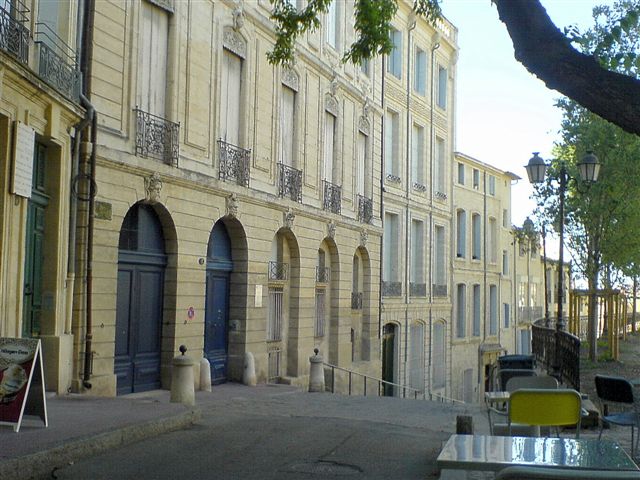
 Ce weekend j'ai eu la chance de pouvoir visiter Montpellier, dans le sud de la France. Capitale du département de l'Hérault et de la région de Languedoc-Roussillon, Montpellier est une superbe ville méditérranéenne, presque parfaite. Elle a été planifié pour être vraiment vécue par les piétons, dans le centre ville mais aussi dans des parties plus modernes comme Antigone. Près de la mer et pas loin des montagnes, touchée par un climat superbe, elle est un régal pour le visiteur, avec le mélange de petites places, ruelles de pierre calcaire, boulevards, etc. En plus avec le superbe temps qu'il faisait, j'ai presque oublié le nord... il faudrait y aller plus souvent. Cliquez ici pour voir quelques photos.
Cinema/tv: "Six Feet Under" is over

Six Feet Under is over. It is for me now because I just finished watching its fifth and last series. But in fact it was concluded in August 2005, although it was only now released on DVD. It was a critically acclaimed and popular television drama produced by HBO, who have already produced excellent series like “Sex & the city”. It first started on June 3, 2001 and went on for five years!
The show was created by Alan Ball and revolves around a family funeral business (the Fisher) run by two brothers, and the rest of the family and the relationships around the family. It is set in present day Los Angeles, California (2000–2005).
Although it is a conventional family drama, dealing with the usual issues as relationships, sex, infidelity and religion it is quite original and innovative, not only for its focus on a “different” topic – death – but also for the sometimes profound way it presents the characters and human relations and explores this on multiple levels (personal, religious, and philosophical). Each episode always begins with a death (with two exceptions) which will be dealt by the funeral home and which sets the tone.
Over the last months I had developed a certain anxiety towards "Six Feet Under," waiting eagerly for the final series to come out. Despite the fact that the series was not always perfect, that it was sometimes frustrating to see how it sometimes just didn’t advance or the inconsistencies of the characters (one minute George can't go out shopping by himself, some episodes later he's giving a well-prepared speech at Nate’s funeral; one minute Vanessa is manic depressive and driving Rico away, and the moment he finally cheats on her, she's gets magically cured) and other typical soap opera tendencies, it becomes addictive and one becomes “part” of the Fisher’s life and is eager to know what will happen next and will wait eagerly for the next dialogues.
After all, the ending was quite satisfying and original, for such a series, which wasn’t won in advance. The last five minutes show the death of all the central characters, in the future and was particularly moving (the final death occurring in 2087). Yet somehow at the end it is quite frustrating because we end up wondering all that would happen to the family and all the characters.
All in all, an interesting series, superbly interpreted by nearly all the actors, which makes us wait for other original series by HBO. To be recommended.
Read more: click here and/or here.
30 mai 2006
Travel: Barcelona posa't guapa!

Barcelona is definitely one of my favourite cities. A fascinating city, it has got everything: history, style and many architecture styles, design, monuments, museums, shops, a great location and a nice climate, an eclectic mixture of modernity and tradition, of old and new, avant-garde, sea, mountain, good food, good looking people. Here is a small tribute to that special mediterranean port, with some photos I took. Not necessarily the usual monument - Gaudi - grand boulevards of the Eixample pictures, but rather from popular areas or mixed areas like Raval, Bairrio Chino, El Born but also from other parts, even Sitges... details that have kept my attention. To be completed hopefully in future trips... click here
Music: new I AM X album

After the excellent first album "Kiss & swallow", Chris Corner, formerly from the group Sneaker Pimps, has brought out the new release of his group's I AM X, “THE ALTERNATIVE”, last April 21st 2006 (out in Belgium as well but not in France yet). This album is even better than the first one, and is to be heard in-one-go… non-stop… actually it is to be heard as one long song... It's a sad and romantic album, for those melancholic moments, when you feel like being alone or when you feel that the world has left you alone.
The first track "The president" is now available as a free download.
I AM X is now touring Europe with its Alternative tour, until mid August. I have unfortunately missed them in Brussels last May 6, when they played @ the Botanique, but there will be a new chance maybe when they play at the Dour Festival (not far from Mons) next July 15.
Music: Kitsuné again

La maison Kitsuné (connue pour ces excellentes compils Kitsuné Midnight et Kitsuné X) sort sa nouvelle compilation Kitsuné Maison 2. La compilation, qui veut être la découverte de nouveaux talents, offre une sélection de morceaux de tous horizons très éclectique avec Wolfmother, Bloc Party, Cazals, Azzido da bass, Joakim, Digitalism (excellent!), Simian Mobile Disco, Fox n wolf, Adam Sky, Next level Pop.... Cette compil sera disponible en avant-première chez Colette à Paris (for the lucky ones…) et sera aussi dispo sur eshop de Colette (attention, leurs envois par poste prennent sont temps).
[EN]
Kitsuné brings out (known for its excellent compilations Kitsuné Midnight & Kitsuné X) its new CD Kitsuné Maison 2, reinforcing Kitsuné's status as discoverers of new talents. This album presents an ecclectic collection of tracks by superbly-sentimental groups/singers, such as Wolfmother, Bloc Party, Cazals, Azzido da bass, Joakim, Digitalism (yeah!), Simian Mobile Disco.... The CD will be on pre-sale available @ Colette in Paris (yes, for the lucky few) and can be ordered from the Colette e-shop, as from June 1st.
29 mai 2006
MUSIC: The Barcelona Spring festivals are coming!


The twelfth edition of the Sonar festival will be held on 15th, 16th and 17th of June 2006 in Barcelona. Those will be three days and three nights in touch with the most up-to-date music developments and featuring relevant Spanish and international artists. Sónar will be presenting over 300 activities including DJ sets, concerts, films projected at the SonarCinema and works in every multimedia format: installations, Net art, design, etc. Sónar aims to be an essential meeting point for an alert public, cutting-edge and avant-garde artists and the most influential professionals from the sectors of music and modern arts.
Sonar by day presents Concerts, DJ sets, a professional fair, a multimedia area, audio-visual projections in all formats, a mediatheque, conferences and exhibitions. Nights at Sónar are of a distinctive nature, an enormous cosmopolitan celebration, similar to other European music events but with a Mediterranean flair, giving it a unique atmosphere. Each night DJs, VDJs perform concerts from the broadest spectrum of dance music simultaneously in 4 areas, occupying an area of more than 10,000 meters, divided between covered and open-air spaces.
Sonar will stage some well known and other less-known names from the world of electronic music, such as Jimmy Edgar, Jeff Mills, Ángel Molina, Goldfrapp, Miss Kittin, Modeselektor, Agoria, Wagon Cookin´, Hot Chip, Dave Clarke, Disco D, The Infadels, Isolée, Richie Hawtin vs Ricardo Villalobos, Tiga, Gilles Peterson, Laurent Garnier & Bugge Wesseltoft and Herbert among others.
The prices are not cheap… the General Pass for the 3 Days + 2 Nights of the festival costs 130€ while the Day Ticket is 25 € and a Night Ticket 40 €.
But Barcelona never stops, never sleeps... In the meantime, the Estrella Damm Primavera Sound festival will take place from June 1 to 3. This year's edition changes location from the Pueblo Español in Montjuic to the previous location of the Forum of the Cultures of 2004, at the end of Diagonal avenue - see website for details.
This year's edition will include musicians, DJs and groups like 2 Many Dj's, Ellen Allien & Apparat, Lou Reed (yes!), M.A.N.D.Y., Erol Alkan, Stuart A. Staples, The Flaming Lips, Yeah Yeah Yeahs, José González, Killing Joke and the spanish cult group La Buena Vida, among others.
Tickets are also not cheap, a three-day tickets 115 € while day tickets for Thursday 1st of June are 40 € and 65 € for Friday 2nd and saturday 3rd. You also have the chance to listen to all the artists and news from the Primavera Sound festival on the alternative radio from Barcelona ScannerFM, monday to fridays at 17:00.
So what are you waiting for? Check out your local low cost companies (Vueling, Virgin, Ryanair, etc) and book your flights to Barcelona... the place to be... and not only for its music festivals!
Citizenship: Gay Pride banned in Moscow

At a time of the year when Gay Pride marches are being held all around the world, commemorating the Stonewall riots (which took place in New York in June 27, 1969, 37 years ago) and cellebrating the pride and right to be "different", Moscow saw the first-ever attempt to stage a gay-pride march end in violence, injuries and mass arrests, last saturday, May 27.
Despite Mayor Iuri Loujkov's ban, activists took to the streets to protest. More than hundred people were jailed for questioning by the Moscow police force and tens of protestors violently attacked by skinheads and religious extremists saturday, who shouted "Moscow is not Sodome!". The Gay Pride had been banned by the Mayor of Moscow, Iouri Loujkov, considering that such an event was morally "inadmissible". His decision had been backed up by the Tverskoi District Court.
Nikolaï Alekseïev, leader of the organisation "GayRussia", which defends gay rights in Russia, was attacked, with several other activists when they tried to approach the unknown soldier's tomb to deposit flowers, as noted a journalist of AFP. The aim of the gesture was to show a parallel between the prohibition of the Gay Pride, the fight against gay rights and the fight against nazi Germany.
Some members of Parliament, official representatives and journalists from the US, France, the UK, the Netherlands and Germany had come to Moscow to support the local gay community and to protest against the ban of the parade. Volker Beck, a German Bundestag delegate, was hit and had his face in blood, while others were also attacked. Philippe Lasnier, from the cabinet of the mayor of Paris, Bertrand Delanoë, was briefly taken in for questioning by the police. Another French participant declared that "the situation of gays in Russia is even worse than I imagined". Foreign delegations had come to demonstrate peacefully but were astonished by the lack of support from the police to protect the demonstrators of the attacks of skinheads and orthodox extremists.
At a time when Russia takes the chair of the Council of Europe and has won a seat in the Human Rights Council of the UN, these facts are extremely worrying. In fact the Russian authorities do not seem to allow minorities the freedom of expression. In a press conference Nikolaï Alekseïev considered that homophobia is only a part of Russia's broader problem of xenophobia.
Read more also at Ilga's website.
[seen in Le Monde] [source of the picture: Ilga's website]
Arts: Expo Almodovar à la Cinémathèque Française à Paris

La Cinémathèque Française à Paris s'est mis à l'heure du plus fameux et atypique des cinéastes espagnols. Le nouveau lieu de la Cinémathèque à Bercy ouvre ses portes à Almodovár, jusqu'au 31 juillet 2006, pour une exposition accompagnée de rencontres, d'une rétrospective de ses films et d'une programmation de ses coups de coeur cinématographiques, présentant un large portrait du cinéaste et de son univers.
Après vingt-cinq ans de carrière, Almodovár incarne toujours le renouveau: avec chaque film on espère qu’il nous surprenne, qu’il nous séduise, qu’il nous émeuve et nous transporte dans son univers unique… on demande à chaque fois qu’il soit toujours plus Almodóvar. Un Grand cinéaste, très espagnol mais très universel, léger et grave, comique et tragique, plein de contrastes et de couleurs. Pas facile d'être à la hauteur des atteintes du public, mais ces films sont toujours intéressants.
L'exposition parvient à nous faire "plonger" dans l'univers "almodovarien" et nous propose un parcours d'entretiens, scènes anthologiques de ces films, objets, de décoration et même des courts jamais vus… des curiosités cinématographiques. Je conseille vivement cette expo, il ne faut pas la manquer… la ¡ Almodóvar Exhibition !
- Le programme complet
24 mai 2006
CITIZENSHIP: Amnesty International brings out 2006 report
Amnesty International has published its 2006 Report [en français]. This Report documents human rights abuses in 150 countries around the world. It highlights the need for governments, the international community, armed groups and others in positions of power or influence to take responsibility. It also reflects the vitality of human rights activists globally, whether in local initiatives, international summits or mass demonstrations. "Outraged by continuing human rights abuses and inspired by hope, Amnesty International members and supporters around the world campaign for justice and freedom for all."
According to AI, during 2005 some of the world’s most powerful governments were successfully challenged, their hypocrisy exposed by the media, their arguments rejected by courts of law, their repressive tactics resisted by human rights activists. After five years of backlash against human rights in the “war on terror”, the tide appears to be turning. Nevertheless, the lives of millions of people worldwide were devastated by the denial of fundamental rights. Human security was threatened by war and attacks by armed groups as well as by hunger, disease and natural disasters. Freedoms were curtailed by repression, discrimination and social exclusion.
The report has of course been received with different enthusiasm by the different countries and organisations. AI denounces that sometimes those countries which refer most to democratic values, of justice and freedom that are sometimes in a position to violate human rights. For the US, however, a spokesman has recalled that it was precisely AI the first to denounce Saddam Hussein's regime. The US considers that the NGO should better focus in participating in the process of the ex-dictator instead of denouncing the use of mercenaries in Iraq or the situation in Guantanamo.
The report focus on several issues and considers that there is reason for hope:
· DEATH PENALTY: there are good reasons for hope. By 2005, 122 countries had abolished the death penalty in law or in practice, in comparison to only 16 abolitionist countries in 1977.
· HYPOCRISY: In 2005, the US Administration acknowledged the use of "renditions". Rendition is the practice of transporting persons forcibly and without due process from one country to another where they risk being interrogated under torture or ill-treatment. AI says that renditions are illegal under international treaties to which all European governments are party.
· DUPLICITY: Governments championed human rights on the one hand, and undermined them on the other (examples needed?).
· TORTURE: 141countries are party to the UN Convention against torture and other ill-treatment. However, 104 countries out of the 150 countries in AI’s 2006 report that have tortured or ill-treated people.
· PARALYSIS OF THE INTERNATIONAL COMMUNITY: The conflict in Darfur has been described as staggering in scale and harrowing in nature. Urgent action is needed by the United Nations and the African Union to protect civilians in Darfur. Since 2003, there has been an estimated number of deaths from starvation, disease and killings of some 285,000 plus 2.2 million refugees and people displaced by the conflict. In the meantime, 13 UN Security Council resolutions have been adopted on Darfur, but ZERO United Nations peacekeepers have been deployed in Darfur.
· FAILED PROMISES: At the Millennium Summit in 2000, the world’s leaders set clear targets to solve some of the most vexing global social problems. But, they failed to turn their promises into performance. For instance, Governments promised to achieve universal primary education by 2015, however still more than 100 million children remain out of school. At the same time there is an estimated number of child soldiers of 300,000.
· TORTURE & TERROR: Thousands of people have been detained without charge or trial, tortured and ill-treated in the name of counter-terrorism, as for instance in Guantanamo.
- VIOLENCE AGAINST WOMEN: From birth to death, in times of peace as well as war, women face discrimination and violence at the hands of the state, the community and the family. 2 million girls are still at risk of female genital mutilation each year. Only 9 countries have specific legislation outlawing female genital mutilation. Also 25% of women experience sexual abuse by an intimate partner in their lifetime. 79 countries have still no legislation against domestic violence.
· ARMS CONTROL: The proliferation of small arms is fuelling conflict, poverty and human rights abuses worldwide. 1000 is the average number of people killed every day by small arms !!! 1 to 10 - for every $1 spent on development assistance $10 is spent on military budgets. Plus: 88% reported conventional arms exports are from the 5 permanent members of the UN Security Council: China, France, Russia, UK and USA !!!
None of this is surprising, since, as the report well says, this is a world of duplicity and hypocrisy. To notice only that the violation of human rights based on sexual orientation does not seem to be one of the priorities for AI, and there also is a lot to be reported…

22 mai 2006
Arts: the 25 sexiest novels ever written
The magazine PlayBoy has just established the classification of the 25 sexiest novels ever written. In the top ranking appea "Memoirs of a Woman of Pleasure (Fanny Hill)" by John Cleland, the "Lady Chatterley's Lover" by D. H. Lawrence and "Tropic of Cancer" by Henry Miller. "Some of the titles were famous for being dirty books for decades, contraband smuggled in the US from Paris. A few were champions in the courts, books that freed the language. Some tackled taboos. Others showcased attitude -- either curiosity or humor or energy. To us, they are the ultimate love stories". Check out for yourself.
[Fr]
La revue coquine PlayBoy vient d'établir le classement des "25 romans les plus sexy jamais écrits". Figurent dans le peloton de tête, les sulfureux Fanny Hill de John Cleland, L'Amant de Lady Chatterley de David Herbert Lawrence et Tropique du Cancer d'Henry Miller.
[seen at "le Monde Digital"]
[Fr]
La revue coquine PlayBoy vient d'établir le classement des "25 romans les plus sexy jamais écrits". Figurent dans le peloton de tête, les sulfureux Fanny Hill de John Cleland, L'Amant de Lady Chatterley de David Herbert Lawrence et Tropique du Cancer d'Henry Miller.
[seen at "le Monde Digital"]
World - Darfour: where is China?
A lead journalist from the international Herald Tribune asked Mr Bush this question. Bush has recently asked the international community to join the American effort in ending the Darfour "genocide" (in Sudan). Knowing that the rich and proud Chinese civilisation has a saying for each circumstance and bearing in mind that China buys 60% of the oil production of Sudan, i.e. 7% of its imports, a proverb comes to mind: "the large tree get the wind." The Chinese "tree", which grows so quickly, has a small "offspring" diplomacy which remains in an unfortunate state of no growth, argues the IHT. Beijing states that it "respects all the cultures and all the regimes". Very convenient, I add. This shouldn't be seen as a sign of "immaturity" but rather of "cynicism" writes the journalist. China will probably not use its veto in the Security Council when the UN will try to put pressure on Khartoum. On the spot, the African Union has huge difficulties in trying to control a conflict which has already made 200,000 deaths and some 2 million refugees, writes the New York Times. China knows this and should take an active role. This should also be the message that Angela Merkel will try to convey during her first official visit to China, requesting Chinese authorities to take a more active role in solving the world's conflicts. Obviously, the UN, the world powers and the World have not learnt with the Rwanda (tragic) experience.
[read in "Le Monde Digital"]
[read in "Le Monde Digital"]
ECONOMY: pure economic statistics in Europe
Eurostat, the Statistical Office of the European Union, brings out the most recent regional statistics on GDP per inhabitant in the EU25 (the 25 member states of the European Union), expressed in terms of purchasing power standards (PPS).
In 2003, GDP per inhabitant ranged from 33% of the average (of the 25 EU countries), in Lubelskie (Poland) to 278% in Inner London (UK). There is still plenty of work for the EU's regional and cohesion policies to reduce disparities within the Union...
One region in seven above 125% of the EU average...
The three leading regions in the ranking of regional GDP per inhabitant in 2003 were Inner London in the United Kingdom (278% of the average), Bruxelles-Capitale in Belgium (238%) and the Grand Duchy of Luxembourg (234%). Among the 37 regions exceeding the 125% level, seven were in Germany, six each in Italy and the United Kingdom, five in the Netherlands, three in Austria, two each in Belgium and Finland, one region each in the Czech Republic, Spain, France, Ireland and Sweden, and the Grand Duchy of Luxembourg. The only region in this group amongst the new Member States was Praha in the Czech Republic (138%).
It should be noted, however, that in some regions the GDP per inhabitant figures can be significantly influenced by commuter flows (as is the case of Inner London or Brussels). Net commuter inflows in these regions push up production to a level that could not be achieved by the resident active population on its own. The result is that GDP per inhabitant can therefore be overestimated in these regions and underestimated in regions with commuter outflows.
…and one in four below 75%
The six last regions in the ranking were all in Poland: Lubelskie and Podkarpackie (both 33% of the average), Podlaskie (36%), Świętokrzyskie, Warmińsko-Mazurskie and Opolskie (all 37%). Among the 60 regions below the 75% level, sixteen were in Poland, seven in the Czech Republic, six in Hungary, five each in Greece and Italy, four each in Germany, France (all overseas departments) and Portugal, three in Slovakia, two regions in Spain, and Estonia, Latvia, Lithuania and Malta. The lowest ranked region amongst the old Member States was Norte in Portugal (57%).
In the European Region, cohesion policies (The ERDF - European Regional Development Fund, and the Cohesion Fund), which account for around one third of the Union's budget, play a key role in the effort of development of the lowest ranked regions, in reducing development disparities by promoting policies that favour economic growth, job creation and improve the competitiveness of those regions. In particular regions with a GDP per head lower than 75% of the Union's average (in PPS).
In 2003, GDP per inhabitant ranged from 33% of the average (of the 25 EU countries), in Lubelskie (Poland) to 278% in Inner London (UK). There is still plenty of work for the EU's regional and cohesion policies to reduce disparities within the Union...
One region in seven above 125% of the EU average...
The three leading regions in the ranking of regional GDP per inhabitant in 2003 were Inner London in the United Kingdom (278% of the average), Bruxelles-Capitale in Belgium (238%) and the Grand Duchy of Luxembourg (234%). Among the 37 regions exceeding the 125% level, seven were in Germany, six each in Italy and the United Kingdom, five in the Netherlands, three in Austria, two each in Belgium and Finland, one region each in the Czech Republic, Spain, France, Ireland and Sweden, and the Grand Duchy of Luxembourg. The only region in this group amongst the new Member States was Praha in the Czech Republic (138%).
It should be noted, however, that in some regions the GDP per inhabitant figures can be significantly influenced by commuter flows (as is the case of Inner London or Brussels). Net commuter inflows in these regions push up production to a level that could not be achieved by the resident active population on its own. The result is that GDP per inhabitant can therefore be overestimated in these regions and underestimated in regions with commuter outflows.
…and one in four below 75%
The six last regions in the ranking were all in Poland: Lubelskie and Podkarpackie (both 33% of the average), Podlaskie (36%), Świętokrzyskie, Warmińsko-Mazurskie and Opolskie (all 37%). Among the 60 regions below the 75% level, sixteen were in Poland, seven in the Czech Republic, six in Hungary, five each in Greece and Italy, four each in Germany, France (all overseas departments) and Portugal, three in Slovakia, two regions in Spain, and Estonia, Latvia, Lithuania and Malta. The lowest ranked region amongst the old Member States was Norte in Portugal (57%).
In the European Region, cohesion policies (The ERDF - European Regional Development Fund, and the Cohesion Fund), which account for around one third of the Union's budget, play a key role in the effort of development of the lowest ranked regions, in reducing development disparities by promoting policies that favour economic growth, job creation and improve the competitiveness of those regions. In particular regions with a GDP per head lower than 75% of the Union's average (in PPS).
ARTS: encore la danse contemporaine à Bruxelles
Le festival initialement nommé Danse à la Balsa s'est associé en 2004 au théâtre Marni et s’associe cette année à Charleroi/Danses pour devenir Danse Balsa Marni & Raffinerie. Ensemble ils proposent des spectacles de danse contemporaine du 1er au 24 juin au Théâtre de la Balsamine, au Théâtre Marni, à la Raffinerie ainsi qu’à l’Espace Senghor. Il y a des choréographies qui semblent intéressantes et d'entre elles je conseille "Drink your wine in my glass", choreographée par l'espagnol Fernando Martín (un copain) qui danse en duo avec Sarah Piccinelli – les 14, 15, 16 juin à 19h30 au Théâtre Marni.
Pour des renseignements, informations et réservations: http://www.balsamine.be/danseX_infos.php
Infos/
Théâtre de la Balsamine
1 avenue Félix Marchal / 1030 Bruxelles
02 735 64 68
balsamine@skynet.be / www.balsamine.be
Charleroi/Danses
Raffinerie / 21 rue de Manchester / 1080 Bruxelles
071 20 56 40
www.charleroi-danses.be
Théâtre Marni
25 rue de Vergnies / 1050 Bruxelles
02 639 09 80 82
www.theatremarni.com / info@theatremarni.com
Pour des renseignements, informations et réservations: http://www.balsamine.be/danseX_infos.php
Infos/
Théâtre de la Balsamine
1 avenue Félix Marchal / 1030 Bruxelles
02 735 64 68
balsamine@skynet.be / www.balsamine.be
Charleroi/Danses
Raffinerie / 21 rue de Manchester / 1080 Bruxelles
071 20 56 40
www.charleroi-danses.be
Théâtre Marni
25 rue de Vergnies / 1050 Bruxelles
02 639 09 80 82
www.theatremarni.com / info@theatremarni.com
18 mai 2006
Arts: Rosas @ La Monnaie

Il est difficile de choisir quoi faire les soirées du mois de Mai à Bruxelles. A part les sorties cinémas - et cette semaine il y au moins "Volver" de Almodovar (voir article en post antérieur) et "DaVinci Code" - il y a plein d'activités, ce qui aide au moins à compenser le temps qui n'est pas vraiment à la hauteur... Non seulement il y a le Kunsten festival des Arts, le Jazz Marathon, il y a aussi , vendredi soir @ Ancienne Belgique, CIBELLE, chanteuse brésilienne à l'inspiration bossa-nova-pop-electro-folk... soit une bossa au gout du jour... Et puis il y a ROSAS, le groupe de Anne Teresa de Keersmaker, qui présente sa création 2006 "D'un soir un jour" à La Monnaie, où la compagnie est résidente pour la dernière année (spectacle du 17 au 21 mai). Mais le mois de mai ne s'arrêtera pas là, il y aura plein d'autres manifestations, qui se prolongent en juin (par exemple avec le festival CouleurCafé). Pour ma part, je compte ne pas rater Rosas.
"Evénement exceptionnel, George Benjamin compose pour Rosas une vaste pièce musicale - Dance Figures - qui sera créée par l'orchestre symphonique de la Monnaie sous la baguette de Kazushi Ono conjointement avec la compagnie d'Anne Teresa De Keersmaeker. Benjamin se déploie dans une soirée de danse que Debussy ouvre et referme. Entre eux soufflent les vents véhéments de Stravinsky. Trois compositeurs et six symphonies pour éveiller le mouvement."
17 mai 2006
Brussels Jazz Marathon

This weekend will see the 11th Edition of the Brussels Jazz Marathon make the capital of Europe swing - 19 -20 -21 May. It will be a huge party in the main squares, in hotels, cafés and clubs of Brussels with 400 musicians performing in more than 50 venues. The reputation and quality of belgian jazz are well known and the marathon is not too jazz-fundamentalist. So get ready to swing, chill out & groove in the streets, weather allowing... Check the programme here: www.brusselsjazzmarathon.be
Arts in Brussels: Kunsten Festival des Arts

The Kunsten FESTIVAL des Arts was founded by its director Frie Leysen in 1994, with its first edition. This year it will present music, theatre, dance and other art performances in Brussels between 4 and 27 May.
The conviction that created the KunstenFESTIVALdesArts and is still cultivated by it today is that each one of the realities is complex and cannot be compartmentalised without being damaged. The international festival of contemporary living arts is not built around a pre-established theme or a single artistic discipline, and even less so around a single community, region or country. Its programme brings to light the artistic personalities tackling the complex features of our contemporary societies, and the beauty with which they freely shape current forms to make us hear what they have to say about the present day - without complicating what is simple or simplifying what is complicated.
This is the KunstenFESTIVALdesArts' ninth encounter with the public. It is still a new festival. It asserts the radical choice of not conforming to the tacit borders that often divide up cultural life and our own existences. In Brussels, the symbolic capital of Belgium and of Europe, it offers: - the contemporary work of artists from outside Europe in order to put into perspective the Eurocentric cultural vision with which we are saturated, in spite of ourselves - a high quality selection of current projects by European artists who all too rarely have the opportunity of being discovered by Belgian audiences - the presentation of Belgian artists in an international context - an all too rare platform of encounter for French-speaking and Dutch-speaking artists and audiences in Brussels - dialogue between various contrasting generations, aesthetics and writing, motivated here as elsewhere by the same exacting concern of bearing witness to the present day - a free selection of artistic disciplines - musical theatre, theatre, performance, visual arts and film - that are often blended together to enable the most appropriate language for each contemporary vision to flourish here. Having an international outlook and complementing the existing artistic offerings in Belgium, the KunstenFESTIVALdesArts endeavours to play what it considers to be an essential role of 'bringing together' and 'confrontation'.
The announced failure of the UN Human Rights Council (UNHRC),
Last week the United Nations held elections to the newly created United Nations Human Rights Council (UNHRC), successor to the failed UN Commission on Human Rights.
The 53 members elected (for a period of 2 years plus one) include Algeria, China, Cuba, Pakistan, Russia and Saudi Arabia all of which have excellent human rights records as is widely known. These countries were previously key players in undermining the effectiveness of the now-defunct “Commission on Human Rights”, and so it is to expect that they will try to play the same role on the new Council, steering it away from confronting UN members with their human rights abuses.
Ironically, just before the election, the United States Commission on International Religious Freedom issued its 2006 ANNUAL REPORT, which presents the immaculate records of China, Cuba, Pakistan, the Russian Federation and Saudi Arabia. Here some excerpts about the records of those countries as to religious freedom [source: newsbyus.com]
Cuba: “Religious belief and practice continue to be tightly controlled in Cuba, where the government rarely permits the construction of new places of worship. A new law on religion, adopted last year and meant to ‘legalize’ certain religious activity, actually reinforces the government’s efforts to maintain control over religious practice. Reports indicate that at least three Protestant house churches have been closed, confiscated, and/or demolished since the new law went into effect. In the past year, both registered and unregistered religious groups continued to experience varying degrees of official interference, harassment, and repression.” [Source: ANNUAL REPORT OF THE UNITED STATES COMMISSION ON INTERNATIONAL RELIGIOUS FREEDOM; May 2006, p. 91.]
China: “Every religious community in China is subject to serious restrictions, state control, and repression. The most severe religious freedom abuses are directed against Tibetan Buddhists, Uighur Muslims, Roman Catholics, house church and unregistered Protestants, and spiritual groups such as the Falun Gong – abuses involving imprisonment, torture, and other forms of ill treatment. Though the Chinese government issued a new Ordinance on Religion in March 2005, its provisions, in fact, restrict rather than protect religious freedom, offering Party Leaders more extensive control over all religious groups and their activities.” [ANNUAL REPORT; p. 83]
Pakistan: “…a number of the country’s laws, including legislation restricting the Ahmadi community and laws against blasphemy, frequently result in imprisonment on account of religion or belief and/or vigilante violence against the accused. These religious freedom concerns persist amid the wider problem of the lack of democracy in Pakistan, an obstacle the current government has done little to address. …Given the importance of Pakistan in the U.S. government’s efforts against terrorism, the failure of the Pakistani government to implement genuine religious freedom reforms is a cause for serious concern.” [ANNUAL REPORT; p. 89]
The Russian Federation: “Since the [United States] Commission [On International Religious Freedom] expressed strong concern in its May 2003 report that the Russian government was retreating from democratic reform and endangering significant gains on human rights, including freedom of religion or belief, it has become increasingly clear that this is a deliberate policy of the Russian government. … The country’s progress toward the rule of law and protection of religious freedom and other human rights is now in peril.” [ANNUAL REPORT, 159.]
Saudi Arabia: “The repressive Saudi government continues to engage in an array of severe violations of human rights as part of its repression of freedom of thought, conscience, and religion or belief. Abuses include: torture and cruel and degrading treatment or punishment imposed by judicial and administrative authorities; prolonged detention without charges and often incommunicado; and blatant denials of the right to liberty and security of the person, including coercive measures aimed at women…” [ANNUAL REPORT, 190.]
The 53 members elected (for a period of 2 years plus one) include Algeria, China, Cuba, Pakistan, Russia and Saudi Arabia all of which have excellent human rights records as is widely known. These countries were previously key players in undermining the effectiveness of the now-defunct “Commission on Human Rights”, and so it is to expect that they will try to play the same role on the new Council, steering it away from confronting UN members with their human rights abuses.
Ironically, just before the election, the United States Commission on International Religious Freedom issued its 2006 ANNUAL REPORT, which presents the immaculate records of China, Cuba, Pakistan, the Russian Federation and Saudi Arabia. Here some excerpts about the records of those countries as to religious freedom [source: newsbyus.com]
Cuba: “Religious belief and practice continue to be tightly controlled in Cuba, where the government rarely permits the construction of new places of worship. A new law on religion, adopted last year and meant to ‘legalize’ certain religious activity, actually reinforces the government’s efforts to maintain control over religious practice. Reports indicate that at least three Protestant house churches have been closed, confiscated, and/or demolished since the new law went into effect. In the past year, both registered and unregistered religious groups continued to experience varying degrees of official interference, harassment, and repression.” [Source: ANNUAL REPORT OF THE UNITED STATES COMMISSION ON INTERNATIONAL RELIGIOUS FREEDOM; May 2006, p. 91.]
China: “Every religious community in China is subject to serious restrictions, state control, and repression. The most severe religious freedom abuses are directed against Tibetan Buddhists, Uighur Muslims, Roman Catholics, house church and unregistered Protestants, and spiritual groups such as the Falun Gong – abuses involving imprisonment, torture, and other forms of ill treatment. Though the Chinese government issued a new Ordinance on Religion in March 2005, its provisions, in fact, restrict rather than protect religious freedom, offering Party Leaders more extensive control over all religious groups and their activities.” [ANNUAL REPORT; p. 83]
Pakistan: “…a number of the country’s laws, including legislation restricting the Ahmadi community and laws against blasphemy, frequently result in imprisonment on account of religion or belief and/or vigilante violence against the accused. These religious freedom concerns persist amid the wider problem of the lack of democracy in Pakistan, an obstacle the current government has done little to address. …Given the importance of Pakistan in the U.S. government’s efforts against terrorism, the failure of the Pakistani government to implement genuine religious freedom reforms is a cause for serious concern.” [ANNUAL REPORT; p. 89]
The Russian Federation: “Since the [United States] Commission [On International Religious Freedom] expressed strong concern in its May 2003 report that the Russian government was retreating from democratic reform and endangering significant gains on human rights, including freedom of religion or belief, it has become increasingly clear that this is a deliberate policy of the Russian government. … The country’s progress toward the rule of law and protection of religious freedom and other human rights is now in peril.” [ANNUAL REPORT, 159.]
Saudi Arabia: “The repressive Saudi government continues to engage in an array of severe violations of human rights as part of its repression of freedom of thought, conscience, and religion or belief. Abuses include: torture and cruel and degrading treatment or punishment imposed by judicial and administrative authorities; prolonged detention without charges and often incommunicado; and blatant denials of the right to liberty and security of the person, including coercive measures aimed at women…” [ANNUAL REPORT, 190.]
16 mai 2006
17 May is the International Day Against Homophobia
On 17 May 1990, the General Assembly of the World Health Organization (WHO) removed homosexuality from their list of mental disorders. The fight for the recognition of equal rights for lesbian gay, bisexual and transgender (LGBT) people did not end there though.
Today around 80 countries in the world still criminalize homosexuality and condemn consensual same sex acts with imprisonment, of these 9 (Afghanistan, Iran, Mauritania, Nigeria, Pakistan, Saudi Arabia, Sudan, United Arab Emirates and Yemen) still have the death penalty. And Pakistan and Saudi Arabia were elected last week as members of the recently created United Nations "Human Rights Commission"!!! (along with other human rights expert "champions" like Algeria, China, Cuba and Russia). Discrimination on the ground of sexual orientation and gender identity is still not recognized formally by the member states of the United Nations (even though human rights mechanisms such as the Human Rights Committee have repeatedly condemned discrimination on the basis of sexual orientation and gender identity). ILGA has been fighting against discrimination and for the recognition of equal rights of LGBT persons since its creation in 1978. ILGA is strongly committed to celebrating this second International Day Against Homophobia, launched one year ago by the International Day Against Homophobia Committee (IDAHO).
ILGA has created a 30-second video to celebrate this date. See it at ILGA's website.
In every country of the world, please pass the message: 17 May is the International Day Against Homophobia, it is of homophobia that you should be fearful, not homos!
Today around 80 countries in the world still criminalize homosexuality and condemn consensual same sex acts with imprisonment, of these 9 (Afghanistan, Iran, Mauritania, Nigeria, Pakistan, Saudi Arabia, Sudan, United Arab Emirates and Yemen) still have the death penalty. And Pakistan and Saudi Arabia were elected last week as members of the recently created United Nations "Human Rights Commission"!!! (along with other human rights expert "champions" like Algeria, China, Cuba and Russia). Discrimination on the ground of sexual orientation and gender identity is still not recognized formally by the member states of the United Nations (even though human rights mechanisms such as the Human Rights Committee have repeatedly condemned discrimination on the basis of sexual orientation and gender identity). ILGA has been fighting against discrimination and for the recognition of equal rights of LGBT persons since its creation in 1978. ILGA is strongly committed to celebrating this second International Day Against Homophobia, launched one year ago by the International Day Against Homophobia Committee (IDAHO).
ILGA has created a 30-second video to celebrate this date. See it at ILGA's website.
In every country of the world, please pass the message: 17 May is the International Day Against Homophobia, it is of homophobia that you should be fearful, not homos!
Inscription à :
Articles (Atom)